The actor says the eight-hour prosthetics process sparked panic attacks and nearly ended the movie before a weekend “endurance” crash course.
Jim Carrey has played a lot of larger-than-life weirdos, but in a recent look back at the live-action Dr. Seuss adaptation How the Grinch Stole Christmas (2000), he admitted the biggest villain on that set wasn’t Whoville.
It was the makeup chair.
In a Vulture oral history published Dec. 12, 2025, Carrey says the early prosthetics process was so punishing that he spiraled into panic attacks and told the filmmakers he was ready to walk, even if it meant returning his reported $20 million paycheck. The oral history is tied to the film’s 25th anniversary, but one detail is grabbing the most attention.
In the most 2000-Hollywood twist possible, the production brought in a military legend: Richard ‘Dick’ Marcinko, a former Navy SEAL and the first commanding officer of SEAL Team Six.
The Rundown: What Carrey Says Happened On The ‘Grinch’ Set
- Carrey says the original makeup process took about eight hours and triggered panic attacks.
- Director Ron Howard and producer Brian Grazer say Carrey was miserable and prepared to quit.
- Carrey says Marcinko coached him on techniques to interrupt a spiral.
- The production eventually reduced the daily makeup time and adjusted scheduling for Carrey’s skin and recovery.
Jim Carrey Says ‘How The Grinch Stole Christmas’ Makeup Caused Panic Attacks
Carrey’s Grinch wasn’t a dab of green paint and a fuzzy hoodie, but a full-body transformation built with practical effects at a time when studios were still arguing about how much digital “help” a movie should use.
Part of what made Carrey’s experience so brutal is that The Grinch was designed in an era when heavy CGI wasn’t the default, and prosthetics were still king. Legendary makeup effects artist Rick Baker pushed back on the idea of simply painting Carrey green, arguing the character needed to look like an actual fantasy creature, not just the actor in a different shade. That meant a face appliance engineered for expressiveness, a full-body hair suit, and daily application that became its own grind. Carrey credits Kazu Hiro, who applied the makeup every day, with keeping the transformation consistent even as the process wore everyone down.
In the oral history, Carrey describes days spent sealed into an itchy hair suit, dealing with restrictive prosthetics, and wearing large contact lenses that made vision and comfort a constant fight.
That kind of sensory overload is a classic recipe for panic: heat, pressure, limited breathing, limited vision, limited control. Even if you’re Jim Carrey. Especially if you’re Jim Carrey, because the job isn’t just enduring it. It’s performing like you’re having a blast.
Howard recalls seeing Carrey on the floor between setups, trying to ride out panic symptoms, and the team realized they had a real problem: their lead actor was physically and mentally hitting the wall. That’s when Grazer made a pitch that sounds like it belongs in a training montage: don’t quit today. Give it one weekend with a guy who teaches people how to endure hard things.
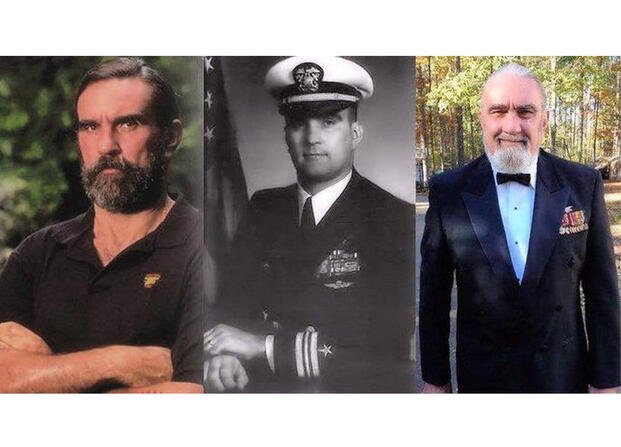
Who Was Richard “Dick” Marcinko, The First Commanding Officer Of SEAL Team Six?
Marcinko wasn’t just “a SEAL.” He was the first commanding officer of SEAL Team Six, selected in the early 1980s to build a dedicated counterterrorism and hostage rescue unit in the aftermath of Operation Eagle Claw, the failed attempt to rescue American hostages in Iran.
The name itself was part misdirection, according to reporting on Marcinko’s legacy: there weren’t six SEAL teams at the time. Calling it “Team Six” was meant to make adversaries overestimate U.S. capabilities.
In other words, Marcinko’s brand was building a culture and a unit that could operate under high stress, with limited time, uncomfortable conditions, and no margin for error. Carrey says he didn’t fully grasp who he’d been coached by until later, but in the moment, what mattered was getting through the day without bailing.

Ron Howard And Brian Grazer Changed The Schedule To Protect Carrey’s Skin
The oral history makes the set sound less like a cozy Christmas card and more like a sweat-soaked endurance event. There were practical sets, elaborate costumes, and performers who couldn’t easily move, see, or even take bathroom breaks without an entourage and a plan.
Carrey’s situation was simply the most extreme version of a problem the whole production shared: the movie demanded physical discomfort as the price of admission for the look.
Eventually, the team made changes. The daily makeup time was reduced, and Howard says the schedule was adjusted because the makeup and adhesive were harming Carrey’s skin, and he couldn’t keep doing it five days in a row.
Carrey also credits an unexpected ally: music. He says the Bee Gees became part of his daily survival ritual, something bright and rhythmic to hold onto while the transformation happened.

What Carrey Says Marcinko Taught Him To Interrupt Panic
Carrey describes Marcinko giving him a grab bag of “pattern interrupt” tactics, the kind of immediate, physical cues meant to yank your brain out of a runaway spiral.
A quick, important note for readers: some of the specific examples Carrey mentioned in the oral history are not healthy coping strategies for panic, and they’re not something anyone should treat as medical advice.
What does translate, whether you’re an actor in prosthetics or a service member dealing with claustrophobia in a gas mask, is the underlying concept: grounding and control-returning habits. Things like:
- controlled breathing (slow exhale-focused breathing is a common approach),
- naming what you can see/hear/feel to anchor yourself,
- stepping away from sensory triggers when possible,
- and working with a professional when panic becomes persistent or disruptive.
If panic attacks are part of your life, the best “training” isn’t a celebrity anecdote. It’s getting real support, practicing tools that don’t harm you, and making a plan you can use before you hit the redline.

Why This Hollywood Story Resonates With Troops And Veterans
There’s a reason this behind-the-scenes tale is ricocheting beyond movie trivia. It’s a strangely recognizable scenario: a mission with a ridiculous uniform, a brutal prep cycle, and a moment where the brain says, Nope. Not doing this.
Whether it’s a first deployment, a new MOS school, a leadership billet you didn’t ask for, or the first time you feel your body revolt under stress, the lesson isn’t “tough it out.” It’s that even high performers hit limits, and getting through those limits is often a team effort. Carrey had filmmakers willing to adjust the plan. He had a trainer who understood stress inoculation. And he had a coping ritual that gave him something human to cling to while he looked like a six-foot holiday cryptid.
If you’re active duty or a veteran and you’re struggling with panic, anxiety, or overwhelming stress, consider reaching out to Military OneSource (for non-medical counseling), the VA (if eligible), or the Veterans Crisis Line if you’re in crisis or worried you might hurt yourself.
Because sometimes the most “special operations” thing you can do is simple: ask for help before you hit the breaking point.
Story Continues
Read the full article here