

Trump Announces New Class of Battleships Despite Century of Evidence Proving the Large Warships Are Obsolete



President Donald Trump announced Monday the Navy will build a new class of battleships called the Trump class, with the first ship to be named USS Defiant (BBG-1).
The ship will displace more than 35,000 tons and be capable of speeds exceeding 30 knots, according to the Navy. The battleship will carry nuclear-armed sea-launched cruise missiles, hypersonic weapons, electromagnetic railguns and directed energy weapons. Navy Secretary John Phelan said Trump plans to begin with two ships and eventually build 20 to 25 battleships.
The announcement marks the first battleship construction plan since 1944, when the USS Missouri was delivered to the Navy. The Missouri was the last active battleship in U.S. service before it was decommissioned in 1992.
Trump claimed the new battleships will be “the fastest, the biggest, and by far 100 times more powerful than any battleship ever built.” The claim is factually incorrect. In fact, the American Iowa-class battleships of World War II were larger by 15,000 to 20,000 tons.
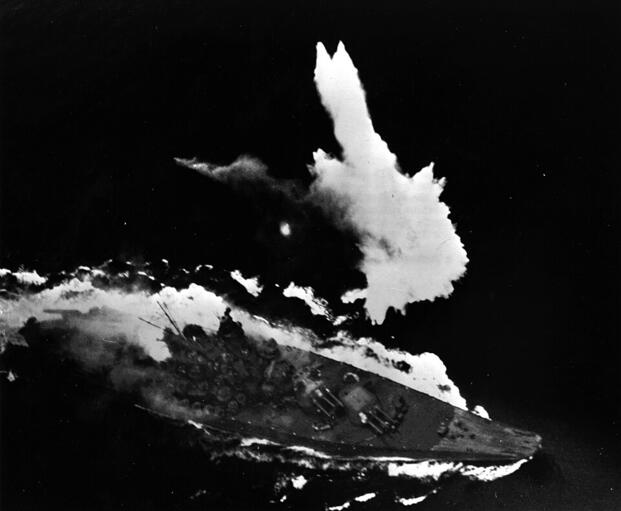
Japan’s battleship Yamato, launched in 1940, displaced 72,000 tons and remains the largest warship ever constructed and put to sea. Trump’s proposed battleship is less than half Yamato’s size. American carrier aircraft sank Yamato in 1945, proving bigger is not better.
Historically speaking, battleships have been obsolete since at least 1921, when a simple bombing demonstration off Virginia’s coast proved the large warships are vulnerable to air attack. That vulnerability has been validated repeatedly through World War II and ever since as aircraft, submarines and cruise missiles systematically demonstrated that bigger and more expensive warships are easier to sink.
They are simply not worth the costs and risks involved in building, maintaining and using in active combat.
Army General Proves Airplanes Can Sink Battleships
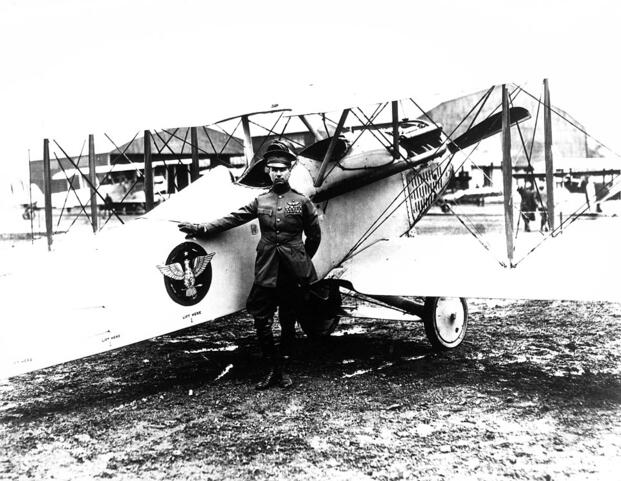
As airplanes became increasingly common in militaries around the world, few nations were willing to admit that large warships were vulnerable to air attack. Several ships were attacked and sent to the bottom of the ocean by airplanes in World War I. Army Brig. Gen. Billy Mitchell, who led American air forces during the war, took notice of the potential.
He organized several bombing tests to prove aircraft could sink battleships. Navy leaders insisted heavily armored battleships could sustain air attack and should remain the center of the fleet. They agreed to the tests but set restrictions designed to hinder Mitchell and protect the targets. Mitchell could not use torpedoes, had to attack from high altitude and was limited on the ordnance he could use.
The target was the captured German battleship SMS Ostfriesand, anchored off the coast of Virginia. On July 21, Mitchell’s aircraft dropped seven 2,000-pound bombs near the ship to create underwater shock waves that would break the ship’s hull. Ostfriesand sank stern-first in just 22 minutes. Naval officers watching from nearby observation ships allegedly wept at the sight.
Battleships were built to fight other battleships. They were designed with thick armor to protect against enemy shell fire. The decks of the ships possessed minimal armor. Ostfriesand’s 12-inch armor belt and powerful guns provided no defense against high-level bombings.
The government and Navy refused to listen. Mitchell continued arguing that battleships were obsolete. The Army ultimately court-martialed Mitchell in 1925 for accusing military leaders of “almost treasonable administration” after they refused to adapt.
In 1924, Mitchell famously predicted Japan would launch carrier-based attacks on Pearl Harbor using aerial torpedoes against anchored and vulnerable battleships. The Army dismissed this as exaggerated. Seventeen years later, Japan did exactly that.
British Biplanes Cripple Italian Battleship Fleet at Taranto
The first combat proof that battleships were outdated came over a year before Japan attacked Hawaii.
On Nov. 11, 1940, the Royal Navy launched 21 obsolete Fairey Swordfish biplanes from HMS Illustrious to attack Italy’s fleet at Taranto harbor. Italy had six battleships protected by 101 anti-aircraft guns, 193 machine guns, 27 barrage balloons, anti-torpedo nets and 13 listening posts capable of detecting aircraft up to 30 miles away.
The Italian government spent a substantial amount of money building and modernizing these ships before the country entered WWII. Though Britain fielded a larger naval force, the Italian battleship fleet was large, state-of-the-art and a serious threat in the Mediterranean.
Italian commanders considered their layered defenses around Taranto to be impregnable and their battleships untouchable.
The Swordfish biplane was obsolete even in 1940, a fabric-covered plane with open cockpits and a maximum speed of 139 mph. It looked as if it belonged in the previous world war.
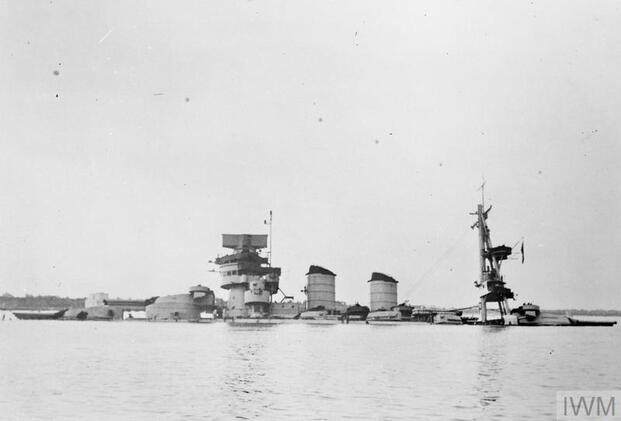
The aircraft attacked at night, flying at just 50 feet above the water through intense fire. They delivered six torpedo hits on three battleships. Conte di Cavour sank permanently. Littorio was disabled for four months, Duilio for six months. Italy’s battleship strength was cut in half in one night for the loss of just two British aircraft.
Italian defenders had visual range, searchlights and massed anti-aircraft guns firing at slow-moving targets flying in relatively straight lines. By every metric, the British should not have succeeded.
Despite years of claiming their new battleships were the best in the world and could take on the Royal Navy, the Italians still failed to prevent catastrophic damage caused by WWI-era biplanes armed with torpedoes.
Six Italian Frogmen Take Out British Battleships
Interestingly, the Italian Navy would also expose how vulnerable battleships could be in modern combat.
On Dec. 19, 1941, six Italian naval commandos from the elite Decima Flottiglia MAS penetrated Alexandria harbor in Egypt while steering three manned torpedoes called “maiali” (pigs). Their targets were the British battleships HMS Queen Elizabeth and HMS Valiant.
The frogmen followed some British destroyers through the harbor gates, dodging depth charges from several patrol boats. They attached the explosives beneath both battleships’ keels. All six commandos were captured, but minutes after one warned of the imminent explosion, massive blasts shook the harbor.
Both battleships sank in shallow water and were out of action for more than a year. The destroyer HMS Jervis and the Norwegian tanker Sagona were also heavily damaged.
Admiral Sir Andrew Cunningham, commander in chief of the British Mediterranean Fleet, had famously led the air raid on Taranto harbor. When speaking of the Italian commando raid in Alexandria, he later said, “We are having shock after shock out here. The damage to the battleships at this time is a disaster. One cannot but admire the cold-blooded bravery and enterprise of these Italians.”
The same commandos also managed to cripple and capture the British HMS York with nothing more than a few mobile speed boats, armed with torpedoes.
Six men achieved what the entire Italian surface fleet had struggled with for months. The raid demonstrated battleships’ vulnerability not just to air power but to small submersibles, explosives and a handful of commandos. In just minutes, six commandos had temporarily given Italy naval supremacy in the Eastern Mediterranean.
Pearl Harbor: Japanese Aircraft Cripple U.S. Battleship Fleet
Following the British attack at Taranto, the Japanese were keen to examine what had just happened to their Axis ally. Japanese Lt. Takeshi Naito studied the attack and concluded that if 21 obsolete biplanes could cripple an entire fleet, hundreds of modern aircraft could annihilate one. Japan began planning their surprise attack against the U.S.
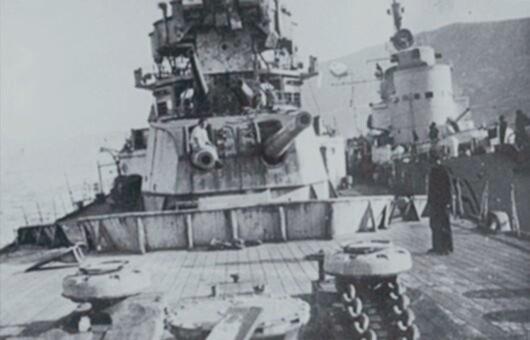
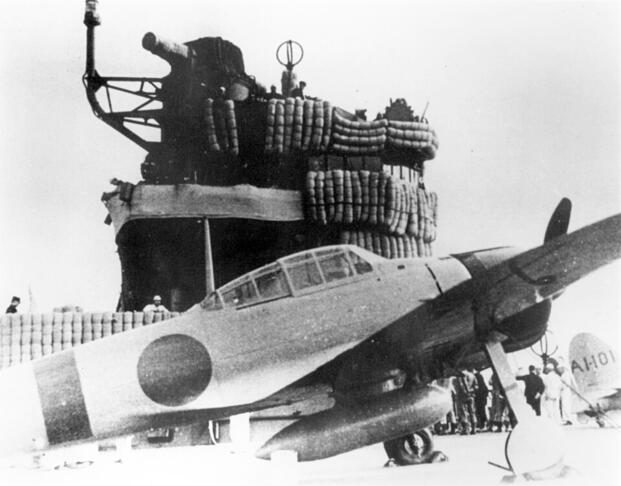
Japanese carrier aircraft struck Pearl Harbor at 7:55 a.m. on Dec. 7, 1941, almost exactly as Mitchell predicted. Eight U.S. battleships anchored at Ford Island were hit within 30 minutes. USS Arizona exploded when a bomb penetrated her forward magazine, killing 1,177 crew instantly. USS Oklahoma capsized after nine torpedo hits, trapping hundreds inside the overturned hull. USS California, West Virginia and Nevada sank in shallow water.
The attack validated everything Mitchell had predicted 20 years earlier. Japanese carriers launched aircraft from 230 miles away, beyond the range of any American weapon. The battleships could not effectively return fire. Japanese torpedoes were modified with wooden fins to run in Pearl Harbor’s 40-foot shallow water, striking at the waterline where armor is weakest.
The government’s refusal to accept aircraft carriers and planes as the dominant weapons in naval warfare cost the lives of thousands of Americans.
Nevertheless, American naval strategy shifted. The three aircraft carriers that survived Pearl Harbor became the center of the Pacific Fleet going forward. Six damaged battleships eventually returned to service but were relegated to shore bombardment and carrier escort duties. If there were any doubts before, Pearl Harbor proved that the battleship-era was officially over.
Carrier Aircraft Sink World’s Most Powerful Battleship
Throughout the Pacific War, the U.S. Navy put its aircraft carriers to good use. At the Battle of the Coral Sea, aircraft carriers engaged each other without ever seeing one another. While tactically a draw, the battle proved that modern naval warfare would be conducted beyond visual range.
While aircraft carriers were just as vulnerable to attack as battleships, they could at least launch their own planes to defend the ship while striking at the enemy carriers. Battleships had to rely on carriers for air cover and smaller escorts to defend against submarines.
At the Battle of Midway, the U.S. concentrated its carrier fleet against Japan’s carriers, and managed to maul them. Japan never recovered, and its battleship fleet was left without the necessary support of aircraft carriers going forward. American planes and ships decimated Japanese fleets in almost every engagement from that point on.
Japan’s Yamato, launched in 1940, displaced 72,000 tons fully loaded and carried nine 18.1-inch guns, the largest naval guns ever mounted on a ship. Japan built Yamato with an unlimited budget to ensure it had the thickest armor ever installed on a warship, a compartmentalized design to prevent flooding and anti-aircraft batteries upgraded repeatedly throughout the war. As it was under construction, Japan toted it as the ultimate warship capable of withstanding any attack.
Yamato fired its main battery against enemy vessels exactly once during WWII, briefly engaging American escort carriers at the Battle of Leyte Gulf in October of 1944. The ship spent most of the war hiding in naval bases because it was too valuable to risk or use effectively.
On April 6, 1945, Japan launched Operation Ten-Go, sending Yamato on a suicide mission to Okinawa with only enough fuel for a one-way voyage. The plan called for the Yamato to beach itself and fight as immobile shore artillery until destroyed.
American codebreakers intercepted communications detailing the operation. On April 7, approximately 400 aircraft from 11 carriers found Yamato about 270 miles from Okinawa. The battleship had no air cover. For two hours, Yamato endured coordinated attacks from aircraft whose weapons the ship’s guns could not reach. American pilots reported at least 10 torpedo hits and seven bomb hits on the vessel.
Yamato capsized at 2:23 p.m. and exploded underwater, taking 2,498 of 2,700 crew. American losses were just 10 aircraft and 12 airmen.
The world’s most powerful battleship sank 270 miles from its objective. No amount of armor, firepower or size could overcome air power’s fundamental advantage in naval combat as carriers could launch strikes from beyond a battleship’s visual and weapons range. If anything, the sheer size of the ship made it easier for planes to sink it and take thousands of sailors down with it.
A Submarine Sinks the Largest Aircraft Carrier Ever Built
Planes are not the only weapon in naval warfare that exposed the vulnerability of battleships.
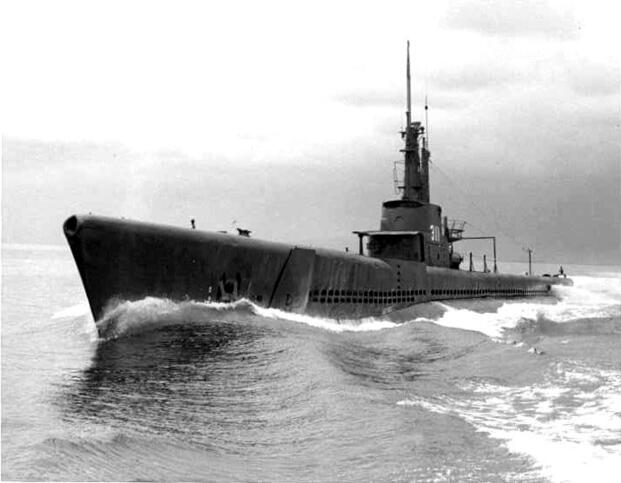
On Nov. 29, 1944, the submarine USS Archerfish found the Japanese carrier Shinano on her maiden voyage from Yokosuka to Kure. Shinano was Yamato’s sister ship, originally laid down as another battleship before being converted into a 69,000-ton aircraft carrier during construction.
Despite thick armor inherited from her battleship design, compartmentalized hull construction and an escort of three destroyers, Archerfish fired six torpedoes and scored four hits. Shinano sank seven hours later, taking with her around 1,435 crew. She remains the largest warship ever sunk by a submarine.
Interestingly, U.S. intelligence was not tracking the ship’s existence. When the Archerfish’s commander reported the sinking of a massive super-carrier, his commanders did not believe him. They felt he was exaggerating his combat record and punished him. He was exonerated decades later when the wreck was discovered.
The sinking of the carrier, as well as numerous other battleships and carriers during the war, demonstrated large warships are highly vulnerable to submarine attack. This means they require not only a constant air cover, but also a formidable force of escorts to defend against hidden submarines.
The United States Abandons Battleships
The lessons of WWII were taken seriously by naval commanders. One of these lessons was that battleships are too big, too expensive, require too many crewmembers, are tough to maintain, are slow and are easy targets for planes and submarines.
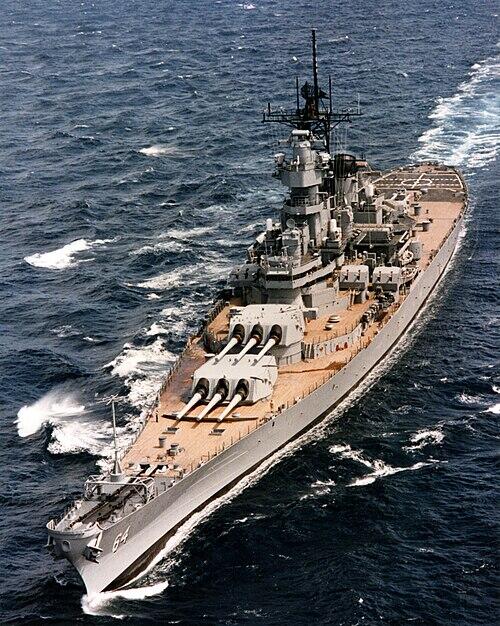
By 1947, all U.S. battleships except the USS Missouri were decommissioned. Four Iowa-class battleships were briefly reactivated for shore bombardment during the Korean War and Vietnam War, then returned to reserve status.
President Ronald Reagan reactivated all four Iowas in the 1980s as part of his 600-ship Navy plan. The Navy added 32 Tomahawk cruise missiles, 16 Harpoon anti-ship missiles and four Phalanx close-in weapon systems to each ship while retaining the original nine 16-inch guns. USS Missouri and USS Wisconsin even fired Tomahawk missiles during Operation Desert Storm in 1991.
All four ships were permanently decommissioned by 1992. The modernization experiment failed because it could not solve the fundamental issues in battleship design. Each Iowa cost approximately $58 million per year to operate and required crews of nearly 2,000 sailors.
Modern Arleigh Burke-class destroyers launched the same Tomahawk missiles with crews of 300-400 sailors at a far lower operating cost. The destroyers also carried the Aegis combat system, integrating air defense, anti-submarine warfare and anti-ship capabilities in a single platform with a smaller signature. Battleships required separate escort vessels to provide these capabilities while being unable to provide its own escort planes or strike enemy targets with the same abilities of an aircraft carrier.
The costs did not justify the limited capabilities. The weapons could be mounted on smaller, cheaper platforms. The large battleship hull provided no tactical advantage while putting thousands of lives at constant risk. By 2011, all four Iowas had become museum ships.
History’s Lessons and Modern Threats
From a historical viewpoint, larger and more expensive warships become easier targets as both weapons and technology advances. Mitchell proved they were vulnerable to airstrikes in 1921. Outdated planes crippled an entire fleet in 1940. A handful of commandos shifted the balance of power in an entire war in 1941. Pearl Harbor confirmed the battleship-era was over that same year. Yamato showed size and armor are irrelevant against air power. Shinano proved submarines can destroy the largest warships as well.
The costs simply became too much to pursue, especially as the cost of one battleship could go to a carrier or even more destroyers.
Today’s threats are exponentially more lethal than before. Chinese DF-21D and DF-26 ballistic missiles can strike moving ships from more than 1,000 miles. Russian Zircon hypersonic missiles travel at Mach 9, meaning no ship defenses can stop them. Advanced submarines operate far more quietly than WWII boats.
Even Venezuela possesses shore-to-sea missiles. Just one of these has the ability to sink a carrier or battleship, taking thousands of lives with it.
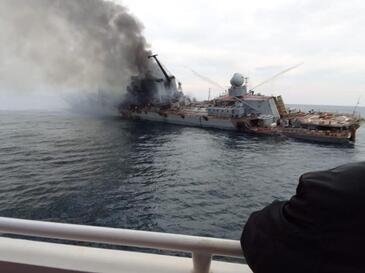
Ukraine has demonstrated unmanned underwater drones can also disable surface ships, having attacked and sank numerous Russian vessels since 2022. The most famous incident came when Ukrainian anti-ship missiles with the assistance of drones managed to sink the heavy cruiser Moskva in April of 2022, despite the ship’s modernized defense systems.
Large surface ships in the U.S. Navy would also face this same issue. The Navy stockpile of SM-6 interceptors are dangerously low while production rates are not meeting current demands. Naval vessels used an extensive number of the defense-missiles while defending against enemy missile attacks in the Red Sea.
The Navy has approximately 17,000 vertical launch munitions ready for use by its ships. However, the fleet has a total of approximately 10,000 launch cells across all ships that use the munitions. This means that in a large-scale conflict where these munitions are being consumed at a high-rate to defend against enemy attacks, the Navy does not have enough to reload its entire fleet even once.
A 35,000-ton battleship would require an even more extensive anti-missile protection system that current inventories cannot provide or sustain. Trumps plan to build these new battleships at a time when the Navy is in dire need of munitions and modernization is fundamentally misguided, especially as the cost could instead go to funding the procurement of munitions or the construction of more mobile destroyers.
Battleships have been obsolete for more than 100 years and the U.S. Navy realized this back in WWII. The weapons and systems that made them obsolete have only become more lethal. The construction of a large surface warship that is not an aircraft carrier will not only revert the branch to its pre-WWII doctrine, but also risks the lives of thousands of sailors.
Story Continues
Read the full article here