U.S. Air Force Sports Outreach Program Manager Katie Spencer has overseen planning for six Super Bowl flyovers, but each year presents new challenges. She and her team are always ready to meet and exceed expectations, especially to celebrate the United States’ 250th birthday.
To commemorate the moment, the Air Force is teaming with the Navy on Feb. 8 to conduct a joint flyover during Super Bowl LX at Levi’s Stadium in Santa Clara, Calif., when the New England Patriots and Seattle Seahawks face off in what is typically the most-watched live telecast every year in the United States.
“When you think of combat operations, where you have to be over a certain point of time and things have to go just right, that’s exactly how it is at an event like the Super Bowl or any sporting event,” Spencer told Military.com. “You have to hit your time over the target of ‘Home of the Brave’ at that moment, and nothing duplicates something that is high stress, high stakes like the Super Bowl.”
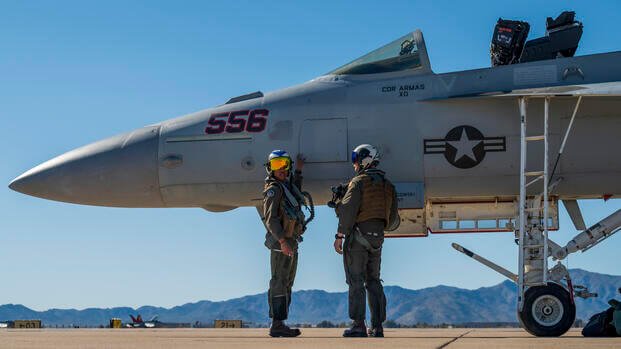
This year’s formation features two Air Force B-1 Lancers, from Ellsworth Air Force Base in South Dakota; two F-15C Eagles, from Fresno Air National Guard Base in California; a pair of Navy F/A-18E Super Hornets and two F-35C Lightning IIs, from Naval Air Station Lemoore in California. The Air Force-Navy collaboration representing 250 years of airpower and maritime strength is deemed a reflection of the entire U.S. Armed Forces—Army, Marine Corps, Navy, Air Force, Space Force, and Coast Guard—that safeguards freedom.
A Military District of Washington Joint Armed Forces Color Guard, an inter-service team involving members from across all services, will render military honors during the national anthem.
Aside from the joint flyover, Air Force and Navy personnel are participating in various community outreach events leading up to the big game—including public displays of aircraft, search-and-rescue demonstration, and backseat flights on the F/A-18F.
Hundreds of Millions of Eyeballs
Spencer said that the annual flyover moment, viewed by hundreds of millions of people in the United States and around the globe, is not just a visual spectacle yet provides U.S. military personnel with a unique simulated combat stress that gives pilots an opportunity to mimic combat environments.
It is “the reason that we are so proficient and that we can be anywhere, anytime is because we do events like this,” she said.
But it isn’t new for her. When she’s not planning for the Super Bowl, her traditional duties involve acting as a liaison between all professional and collegiate sports teams and providing them with the capabilities of U.S. air and space forces.
“When you think about flyovers, when you think about getting our airmen or guardians out onto the field to hold a flag or [throw] a first pitch or some sort of recognition moment, I kind of lead the effort,” Spencer said.
Her foray in the Super Bowl began when there was a diversion in planning about eight years ago. Rather than go the historical route and rotate between demo teams (Thunderbirds, Blue Angels, Thunderbirds, Blue Angels), a change was implemented in 2018 to bring a heritage flight to the Super Bowl that took place at U.S. Bank Stadium in Minneapolis, Minn.
Spencer, who said she is the only service member in any branch who’s been dedicated specifically for sports outreach, said it made sense for her the Air Force to take the reins over this year’s flyover even though the Navy is directly involved.
Celebrating America 250 and Super Bowl 60, we wanted to go big and really have that majestical display of air power for everybody to see. Typically, it’s a special formation, but not as large as this.
It is also the first time that the Air Force and the Navy have done a flyover together over something as big as the Super Bowl, she added.
Minor Bumps Along the Way
Planning for this year’s game began last summer, when it became known that the Navy would join in on the flyover. Spencer described it as “a full sprint” that involved many items being crossed off on a checklist.
That included identifying the aircraft that would be used; figuring out where those aircraft would come from; how many people would be brought onto the playing surface for special recognition before, during and after the game; where aircraft would be staged; whether aircraft would come from their home bases or local bases; and whether the bases being utilized could support the entire fleet of aircraft.
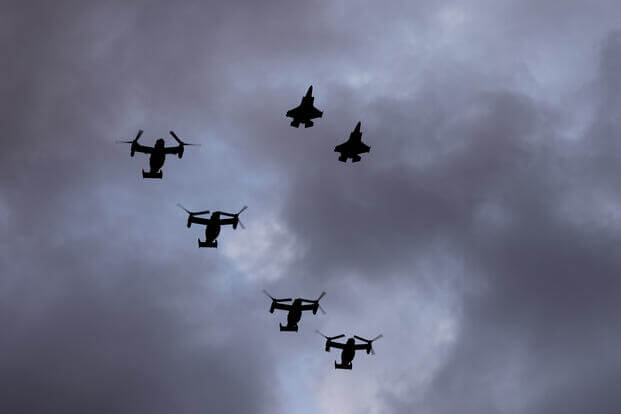
Beyond those logistics that can make or break the flyover that precedes the start of the contest, other planning considerations include working with the Federal Aviation Administration (FAA) and National Football League (NFL), working with the broadcast network (NBC and Peacock are airing this year’s event), and conducting outreach via social media.
“You have all these different entities that go into the planning of a flyover, and this year was uniquely different in that the government was shut down for 43 days,” Spencer said. “So, really, all planning kind of had to halt during that time.
“It’s been really fun to make sure that we’re all doing what we need to do and when we need to do it to make this Super Bowl happen. But everyone is so professional and so skilled at what they do that the shutdown really didn’t—we’re all good.”
Between all the entities involved, from the military to the NFL and beyond, about 100 people come together to make the flyover a rousing success.
Months of Planning in Busy LA
Steve Bultman has a different task at hand when compared with Spencer. Rather than schedule the ins and outs of the flyover and all it encompasses, Bultman has one main job: Making sure the flyover is safe and goes as planned.
Bultman is an aerial controller with Air Combat Command (ACC), which originated in 1992, and works through the Air Force to bolster warfighters. Any flyover over a NASCAR or college football game that involves a fighter aircraft is nine times out of 10 approved by ACC, Bultman said.
This will be the fifth Super Bowl he’s overseen, at this point treating the operation like a seasoned veteran.
“As far as the upside, the biggest thing for us is working with the FAA [Federal Aviation Administration] and working with the air crews,” Bultman told Military.com.
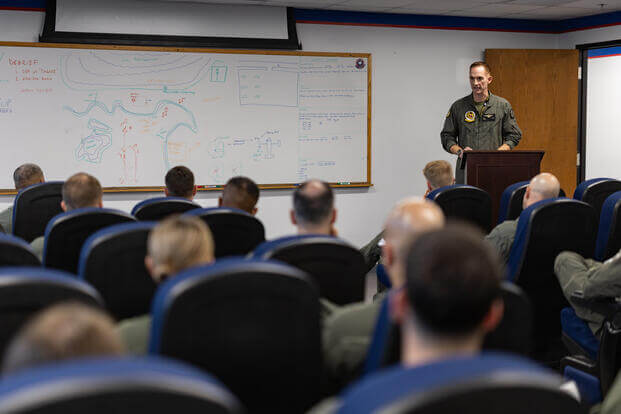
Like Spencer, Bultman and his team started prepping for the Super Bowl around last August.
“We started figuring out, ‘OK, what kind of aircraft do we have, what’s in the area, who is the local flight standards office, [who is] FAA that we have to talk to,’ the people that handle the approach, and the arrivals of airports,” he said.
He noted how there are three large airports around Santa Clara between Oakland, San Francisco and San Jose, saying, “We’re right in the middle of all of them.” Communication between Bultman and his squad, and the airports in the vicinity, can prevent any operational shortcomings.
The biggest challenge this year has been maneuvering, he added, due to the number of aircraft and the surrounding area. While general air traffic was lesser in a city like Tampa, he said, it took some additional planning this go-around due to the proximity to LAX.
While he’s usually in the timing booth, this year Bultman will be on the roof while two new controllers will be joining him: one on the roof, the other in the timing booth.
I’m fairly relaxed. I don’t think the other two that are brand new that have never seen it before are too relaxed, but we’re getting there. I remember the first one that I did in Minnesota, I had no idea what to expect.
“But this one, the people that are with the NFL that we work with on timing, they’ve been there for the last three Super Bowls I’ve done—so, I’m comfortable with them, they’re comfortable with us. It’s kind of nice to see the same face because you know how they work,” he added.
Tom Brady, and Preparing For Uncertainty
The years of practice in making the flyover seamless, however, doesn’t mean that years of practice leads to no pregame jitters—for the players or organizers.
Spencer and Bultman described a strange occurrence moments before the flyover of the Super Bowl in 2021 in Tampa, Fla., when the victorious hometown Tampa Bay Buccaneers were led by quarterback Tom Brady.
“Tom Brady held the team in the tunnel for 30 seconds during production, it was something that nobody anticipated,” Spencer said. “And so it’s not like these planes, once they’re in the sky, you can just tell them to slow down. They can’t just stop, and you can’t tell them to do circles because once they leave the hole and they’re inbound—the math is the math.
“We were lucky that we had Steve and his team, some incredibly talented controllers that were able to kind of get them where they needed to be. But it’s a moment where we’re all on comms and we’re freaking out. We’re trying to figure out what to do. I’m just looking, I don’t see the planes. I’m freaking out and then they tell me to calm down because they know what they’re doing.”
Bultman, who retired from the military about a dozen years ago, said that even with his years of experience, his heart “starts thumping really loud” about 30 minutes prior to the flyover.
“You’re like, ‘Is this going to work?’” he said.
Intersection of US Sports & Military
Both Spencer and Bultman are doing their duties. But from broader perspectives that stem back to their childhoods and the long history of the Super Bowl and its impact on American culture, their roles and responsibilities are not lost on them.
“It’s really humbling,” Spencer said. “I am a civilian at the Pentagon, but I also wear the uniform part-time. I’m a reservist, I served in the military for 17 years, I’ve deployed.
“The one thing I’ve learned is that people…love their military and they love their sports.”
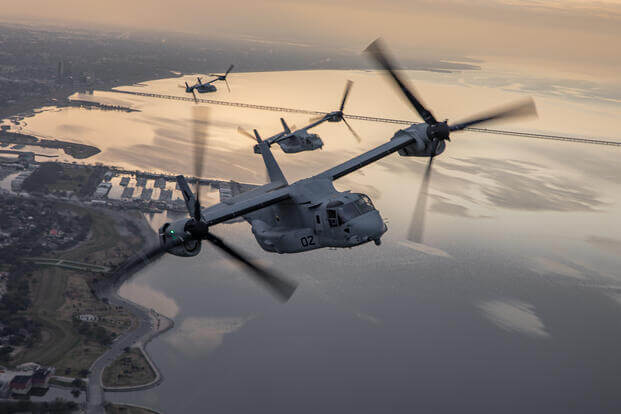
She said that bridging that gap between sports and culture and the U.S. military is not something taken for granted. There’s also the aspect of seeing a young boy or girl who observes the flyover and may be interested in a future military role as a pilot or photographer or maintenance worker.
“It’s a year of planning, the last couple of months is really a sprint,” Spencer said. “When those jets hit their time over target, because of all of the effort that this team has made, you just feel a sense of relief and pride.”
That was not more intense, she said, than when the Air Force celebrated its 75th anniversary during the 2022 Super Bowl at SoFi Stadium in Inglewood, outside Los Angeles. The celebration included a first-of-its-kind “Air Force Heritage Flight” flyover during the national anthem.
I just remember I was on the roof of SoFi Stadium and as it flew over, I just took a knee and wept. I was so overwhelmed with emotion.
Bultman said it’s always a “surreal” feeling. While his first Super Bowl concluded with “a sigh of relief,” other emotions can come into play.
“It’s funny because when it’s done, you get like 50 texts from people saying, ‘Oh, awesome job, great job, it was wonderful,’” Bultman said. “But just seeing military planes flying over, you do get that moment.
“For me, it’s kind of nice because when I was in the timing booth, once they’re inbound, it’s really hands off. There’s really not much you can do. … That 2 minutes, 3 minutes that they’re inbound, you’re just kind of sitting back and watching the show at that point.”
‘Treasuring’ a Unique Opportunity
Spencer and Bultman, who spoke with Military.com about a dozen days out from the Super Bowl, said there are tasks that still require finalizing. The planning goes beyond the flyover itself, too.
A community day will take place Thursday at Moffett Federal Airfield where they are inviting local schools and STEM groups, etc., to come out and engage with pilots and get close-ups of the aircraft flying at the Super Bowl.
They will have a search-and-rescue demonstration, provide care packages with the NFL and others to service partners. There will also be recruiting stations to engage with prospective service members.
“Leading up to this last final push for the game, it’s making sure that all of that is good to go—making sure the invites have been sent, the access has been granted, our social media plan is finalized, that people are getting the credentials that they need,” Spencer said, adding that planning also includes calls with NBC about live shot angles.
Other efforts involve making sure that everyone involved has transportation and is on time, and subsequently fed.
“I just enjoy it, it’s fun,” Bultman said. “It’s almost old hat now, unfortunately. Everybody’s like, ‘You’re going to the Super Bowl?’ And I’m like, ‘Yeah, it’s my fifth one. It’s not that big of a deal.’ They’re like, ‘That’s crazy.’
“Sometimes I do take it for granted, probably, just being there. You think, people never ever get to go to Super Bowl, and I’ve been to five. But I try to treasure each one that I go to and feel that impact and the things that the military can do for that in the community.”
Read the full article here