Starting 2026 with a splash, Toyota just revealed the fifth-generation 2027 Toyota Highlander. It’s longer, lower, and wider than the outgoing model and is propelled solely by electricity. No longer playing second fiddle to the larger — and popular — Toyota Grand Highlander, which debuted in 2024, it instead enters the North American market as Toyota’s fourth BEV.
And styling took a leap forward in the process. The 2027 Toyota Highlander takes design cues from the new-for-2026 RAV4, as well as its bZ brethren. Moreover, it offers front- or all-wheel-drive options, two battery pack sizes, and two trims to choose from.
Power Sources
In 2027, we will see two trims of the Highlander: the base XLE and the top Limited trim.
XLE models start with the smaller, 77kWh battery pack, which will then send power to the front or all four wheels. If you stick with front-wheel drive, Toyota says you’ll get 221 horsepower and 198 pound-feet of torque to move the Highlander around.
Given the immediacy of power delivery, I imagine that to feel adequate, but not quick. Toyota estimates that setup will carry you as many as 287 miles before the battery fully depletes.
Choose all-wheel-drive instead, and Toyota adds a smaller electric motor to the rear axle, which increases peak outputs to 338 horsepower and 323 pound-feet of torque. Doing so drops driving range down to 270 miles. Not a big penalty for that big power boost.
By the way, AWD versions include Multi-Terrain Select and Crawl Control systems, too.
But Toyota will happily instead bolt up a 95.8kWh battery to AWD Highlander XLEs, which increases estimated range to a healthy 320 miles. That creeps awfully close to a full tank of gas. If you choose a Limited trim, it comes standard with the big battery and AWD setup.
When you need a quick recharge, the Highlander gets the NACS-style ports and can charge at a rate as high as 150 kW. Plan to spend about 30 minutes to get to 80% state of charge if you start with 10%. One way to help that along is to ask the Highlander to “precondition” the battery to accept peak power as quickly as possible.
Or go the other way; Toyota says the Highlander will let you use its battery to power other things when in need, via its vehicle to load system.
Sleek Styling
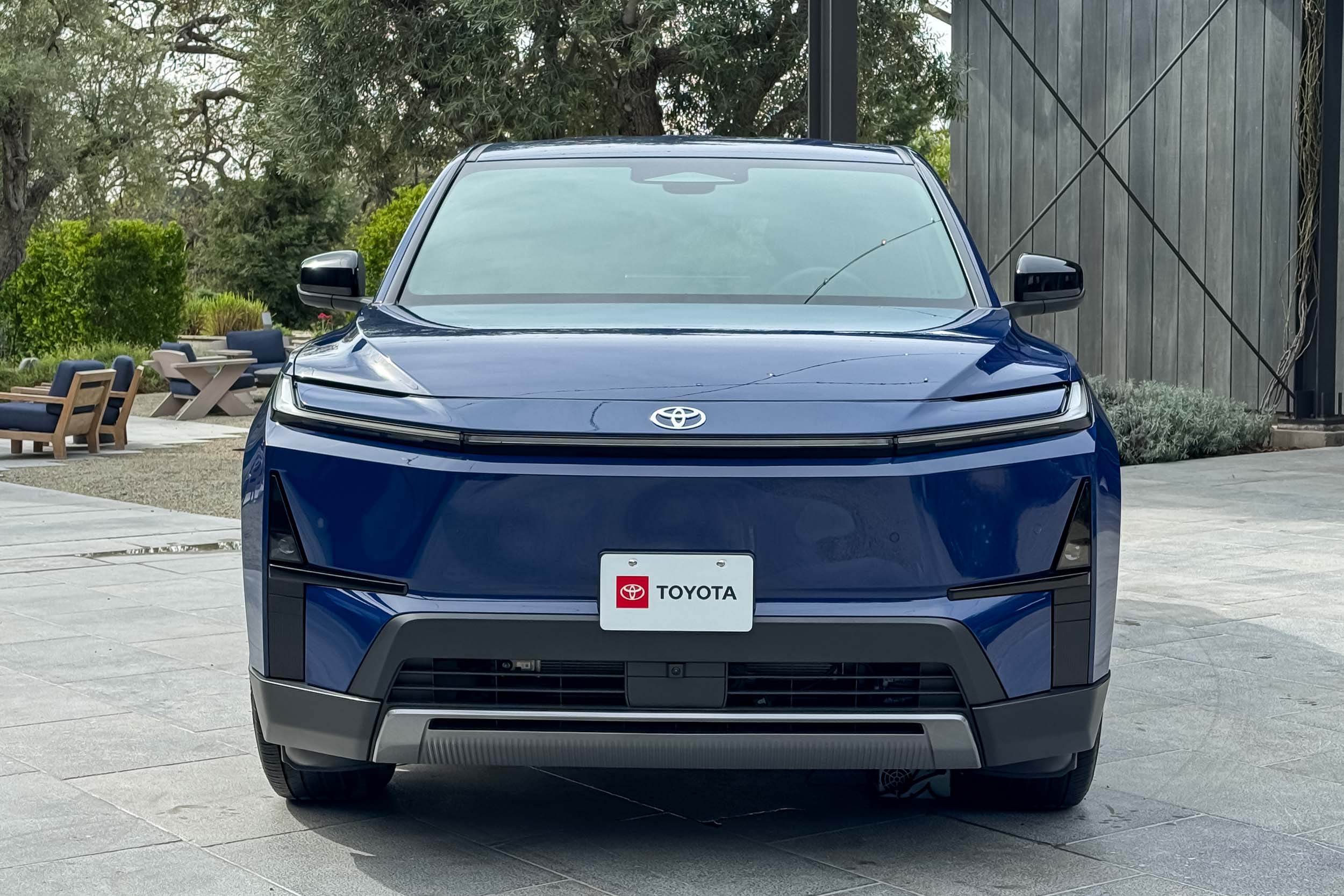
From the front, you see a lot of bZ styling cues, like the full-width daytime running lights. But the front fascia generally looks more like an enlarged RAV4. Regardless, Toyota abandoned the outgoing Highlander’s face. And to my delight, this one looks modern and sleek, with sharp, deliberate lines carved into the bodywork.
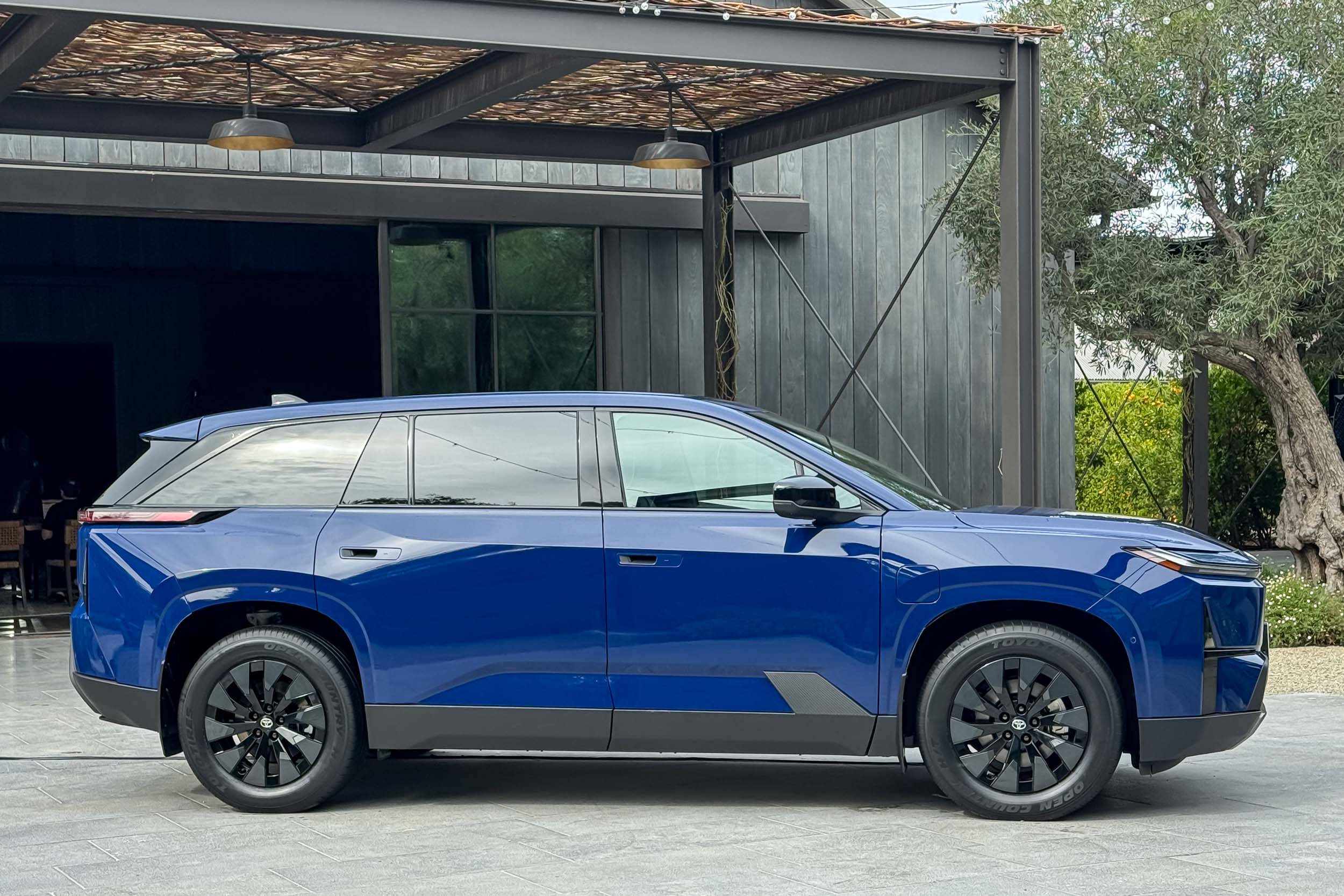
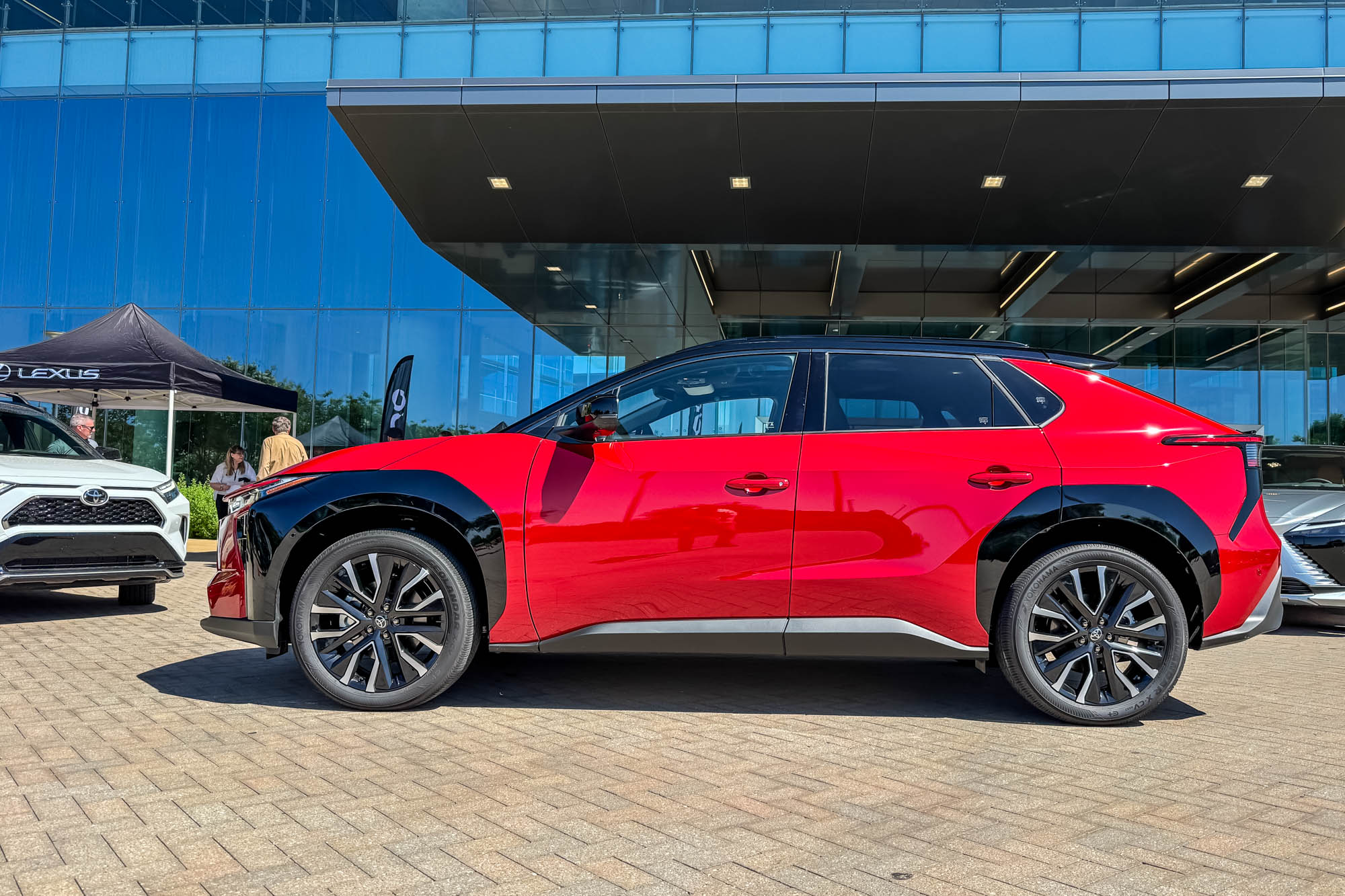
In profile, you see a more traditional, two-box shape, but one that looks much longer and lower than before. That visual effect, at least partially, comes from the 120.1-inch–long wheelbase, an 8.1-inch increase from the outgoing model.
That also shortened both front and rear overhangs and emphasizes the wheel wells. In those wells, you’ll either find the standard 19-inch wheels or optional 22s rolling down the road.
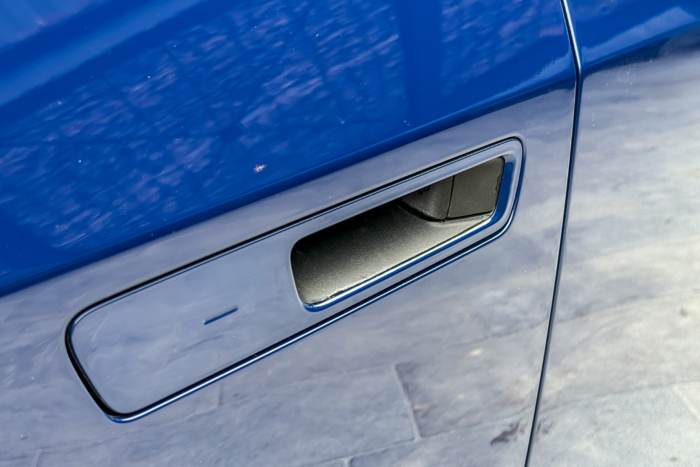
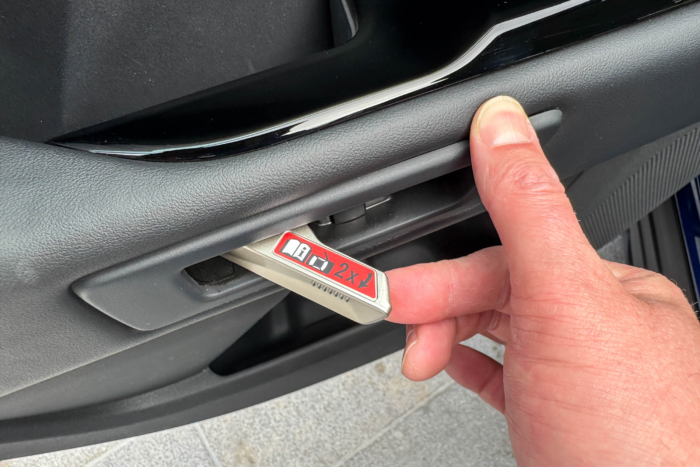
To get in, Toyota mounted “semi-flush” door handles, which sink into the door, rather than stick out. Stick your hand in the slot and push a button to trigger a solenoid to open the door. But don’t worry, Toyota built in a mechanical door opener, if you were to lose power while inside the vehicle.
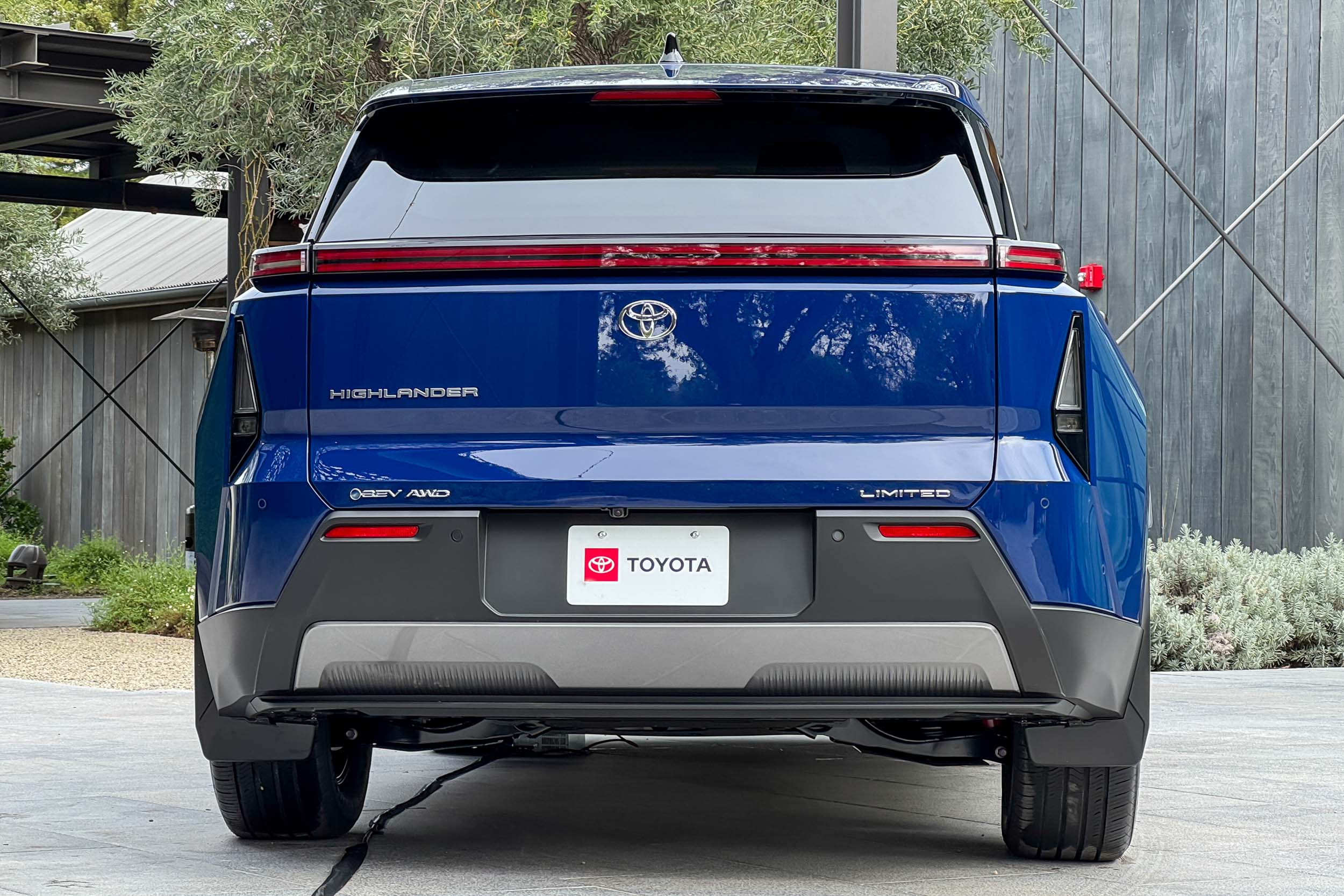
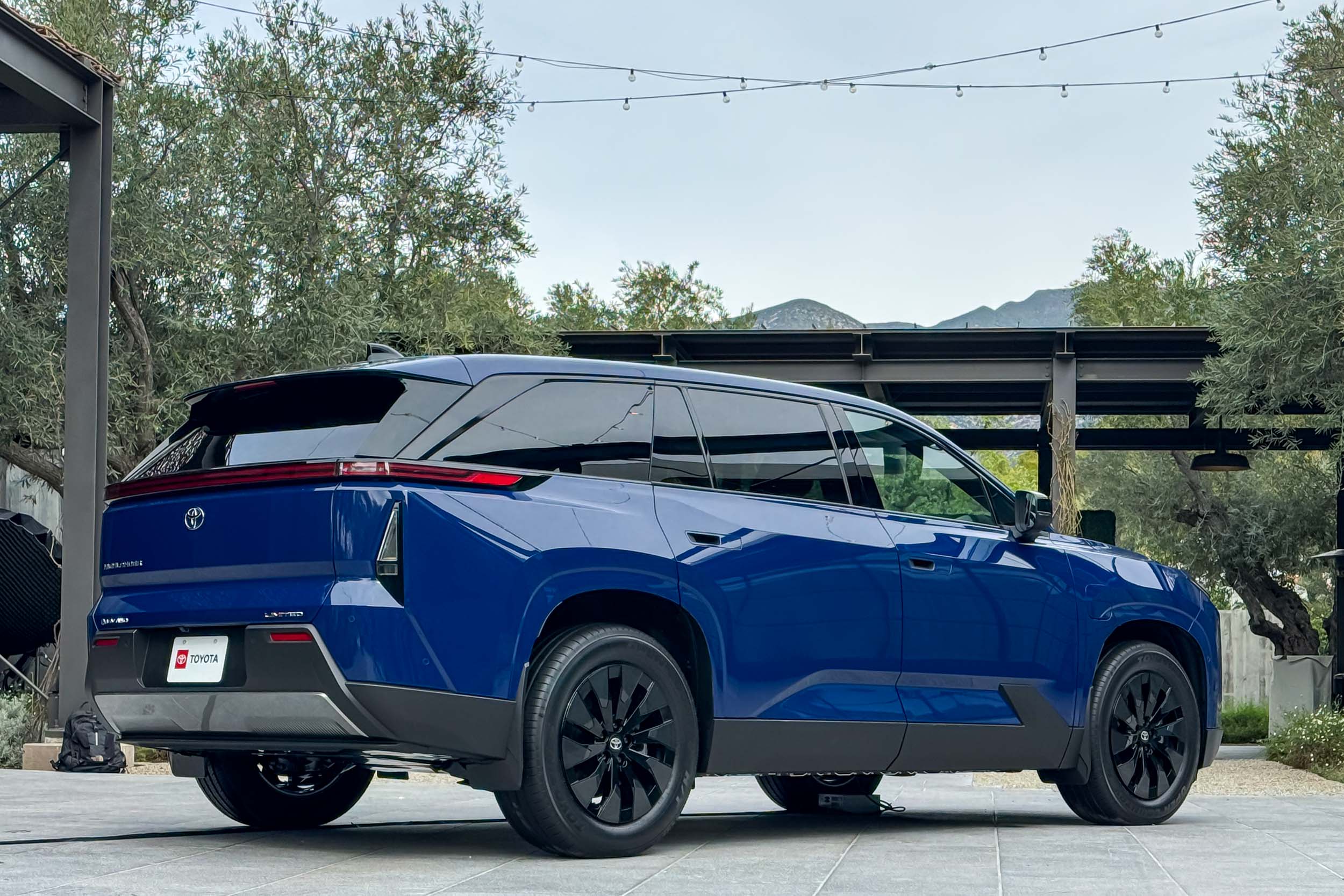
The Highlander looks cleanest from the rear. A pronounced roof-mounted spoiler would stand out, were it not for the large, full-width taillights dominating visual attention. Fortunately, they look cool. Dominate away, taillights! They also add to the visual width of the crossover, which is also 2.3 inches wider than the outgoing model in reality.
Store It Here
Speaking of dimensions, the 2027 Highlander is also lower and longer than before. Now measuring 198.8 inches long, 78.3 inches wide, and 67.3 inches tall, and with the aforementioned 120.1-inch wheelbase. Unlike the other BEV models, the Highlander is built from a modified TNGA-K platform, not the e-TMGA.
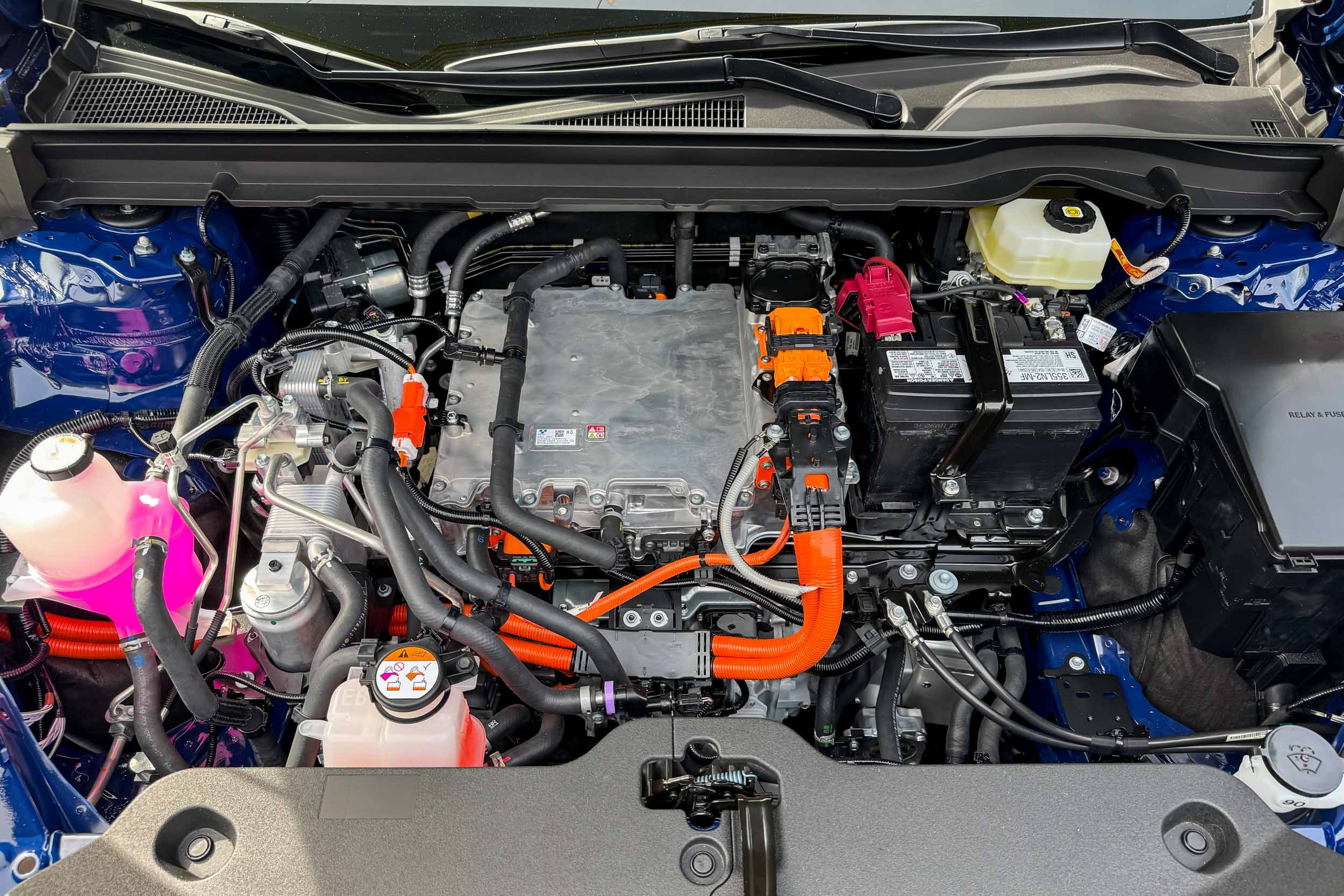
But raise the hood, and it’s just like the others: no frunk. Instead, it’s replete with wiring harnesses, high-tech looking modern metal boxes, but also a nice and familiar 12V battery.
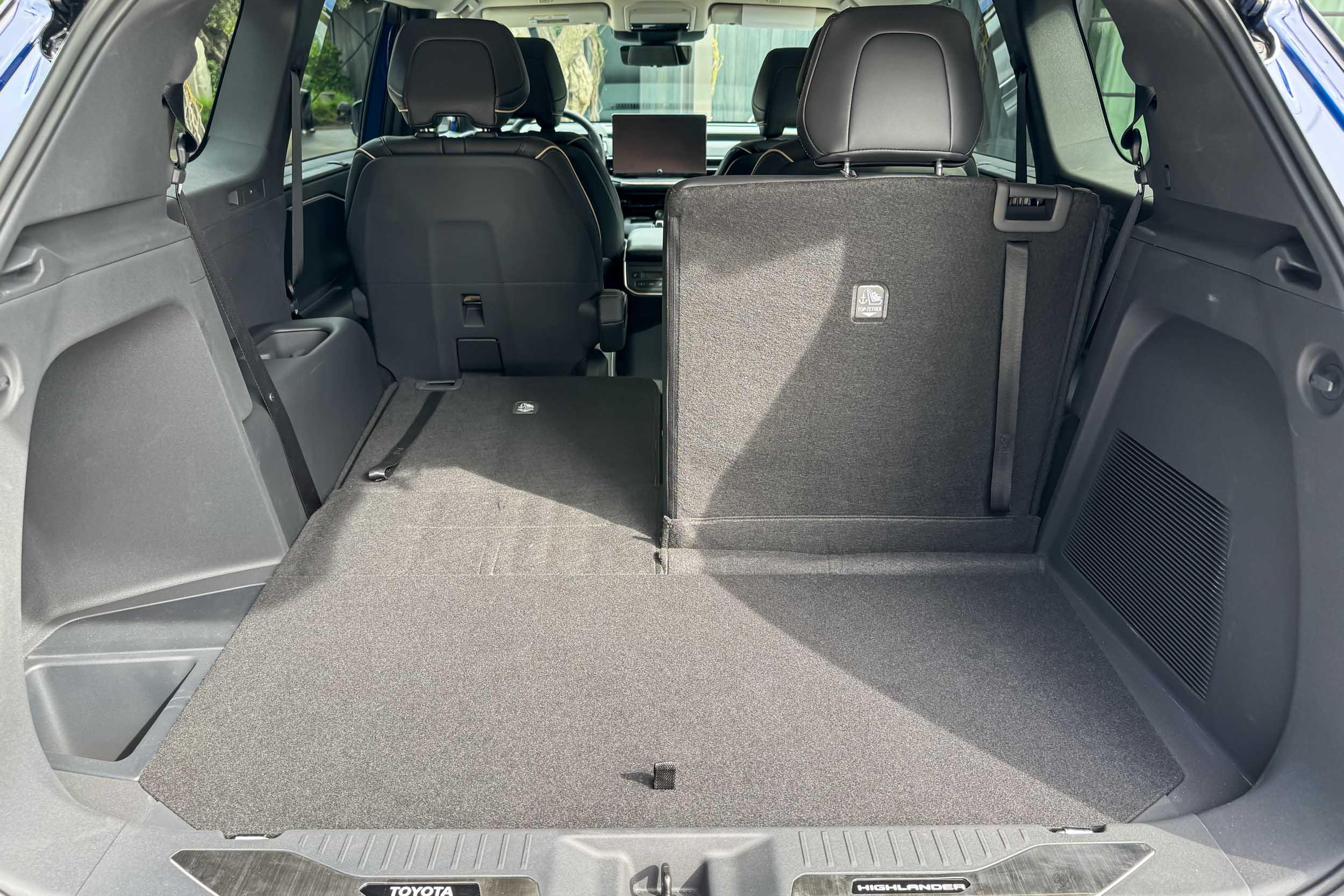
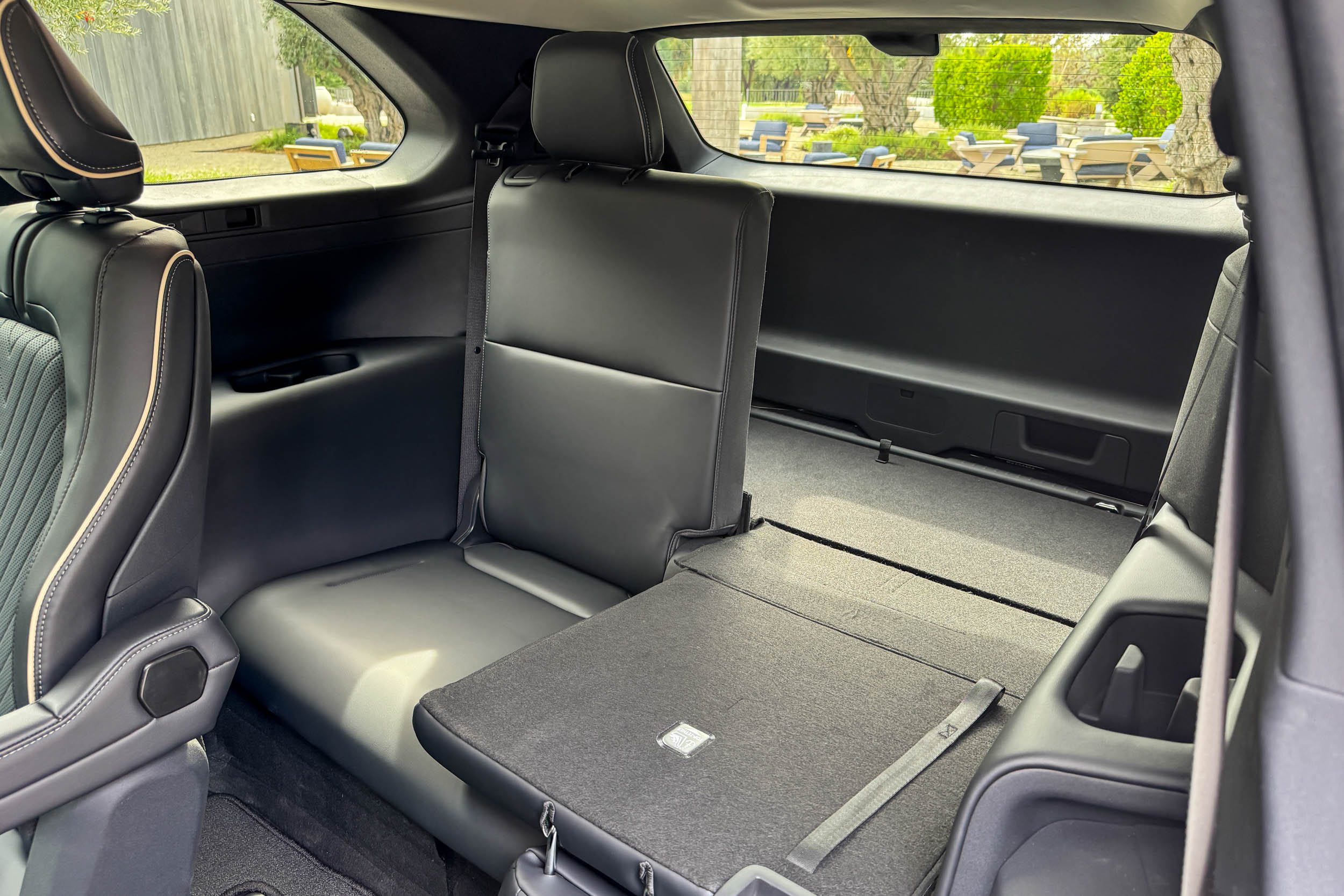
Behind the third row, you’ll enjoy 15.9 cubic feet of cargo space. Fold the third row down, and that number increases to 45.6 cubic feet. This is well behind what the Grand Highlander offers, and about the same as the outgoing Highlander. The extra space went to the passengers.
Modern Interior
The latest Highlander seats six as standard, courtesy of captain’s chairs in the second row. But XLE trims will offer a three-passenger bench second row as an option, if you need to seat seven. Stick with the captain’s chairs, and a single touch of a button will fold and tuck the chair out of the way for easy third-row access.
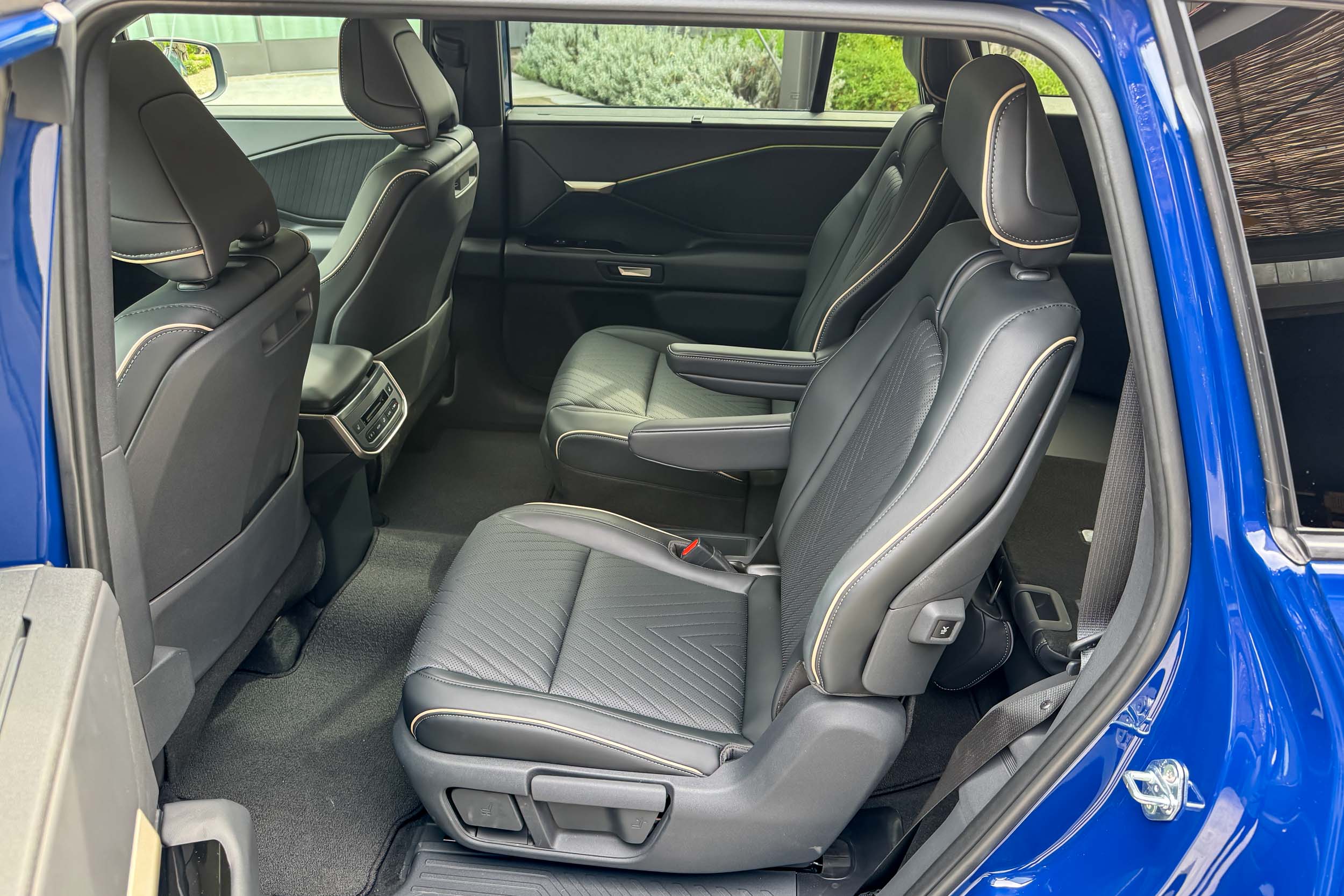
Both passengers back there will get their own USB-C port to charge devices, with another two for the second row and yet another two up front. The front row also gets two wireless smartphone chargers to use; they lie on either side of the push-button shifter.
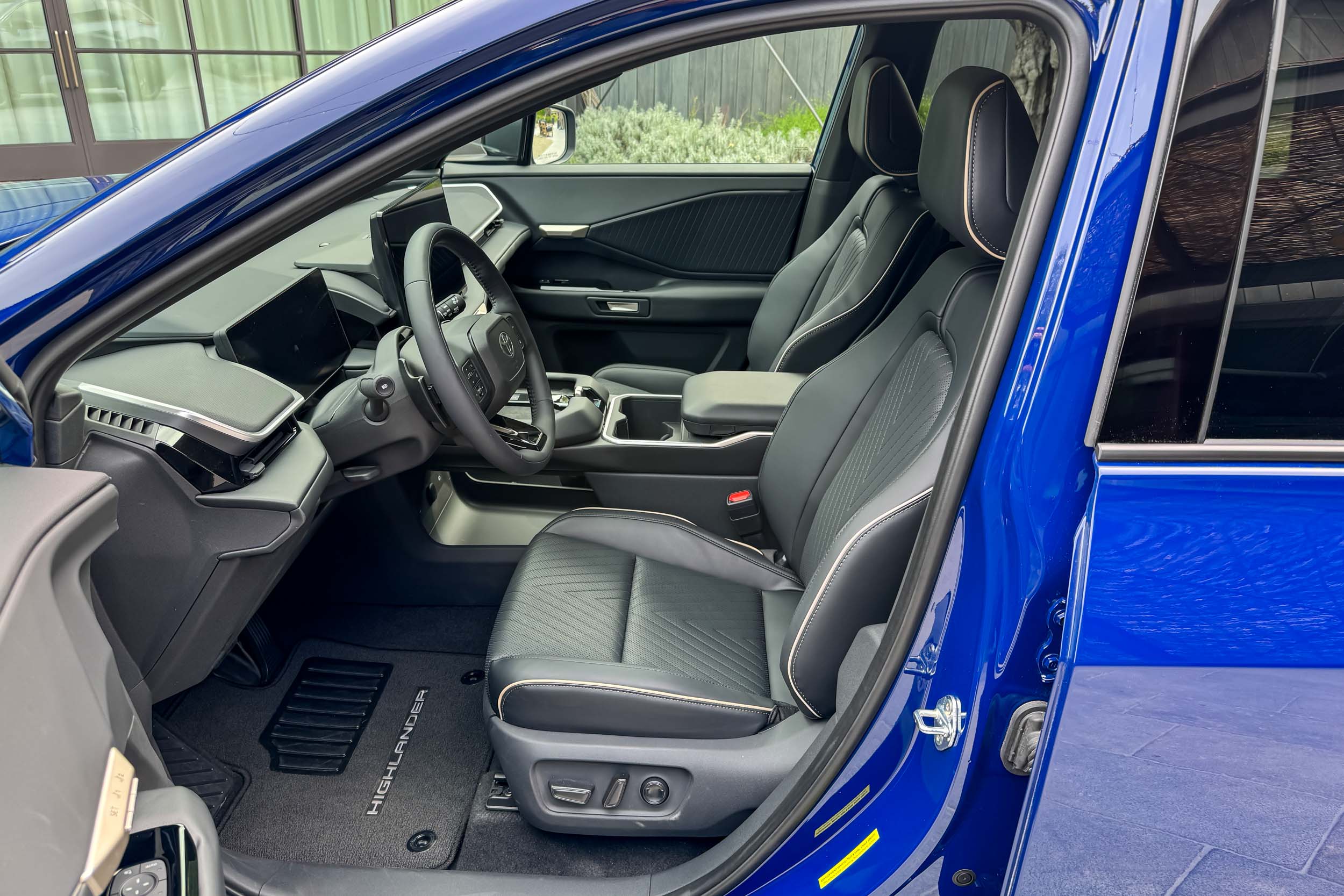
Moreover, the front seats provide sports-car levels of support, courtesy of large upper bolsters and larger-than-average lower bolsters to hold you in place. You sit on SofTex upholstery, by the way. Toyota included heated front seats and a heated steering wheel as standard, too.
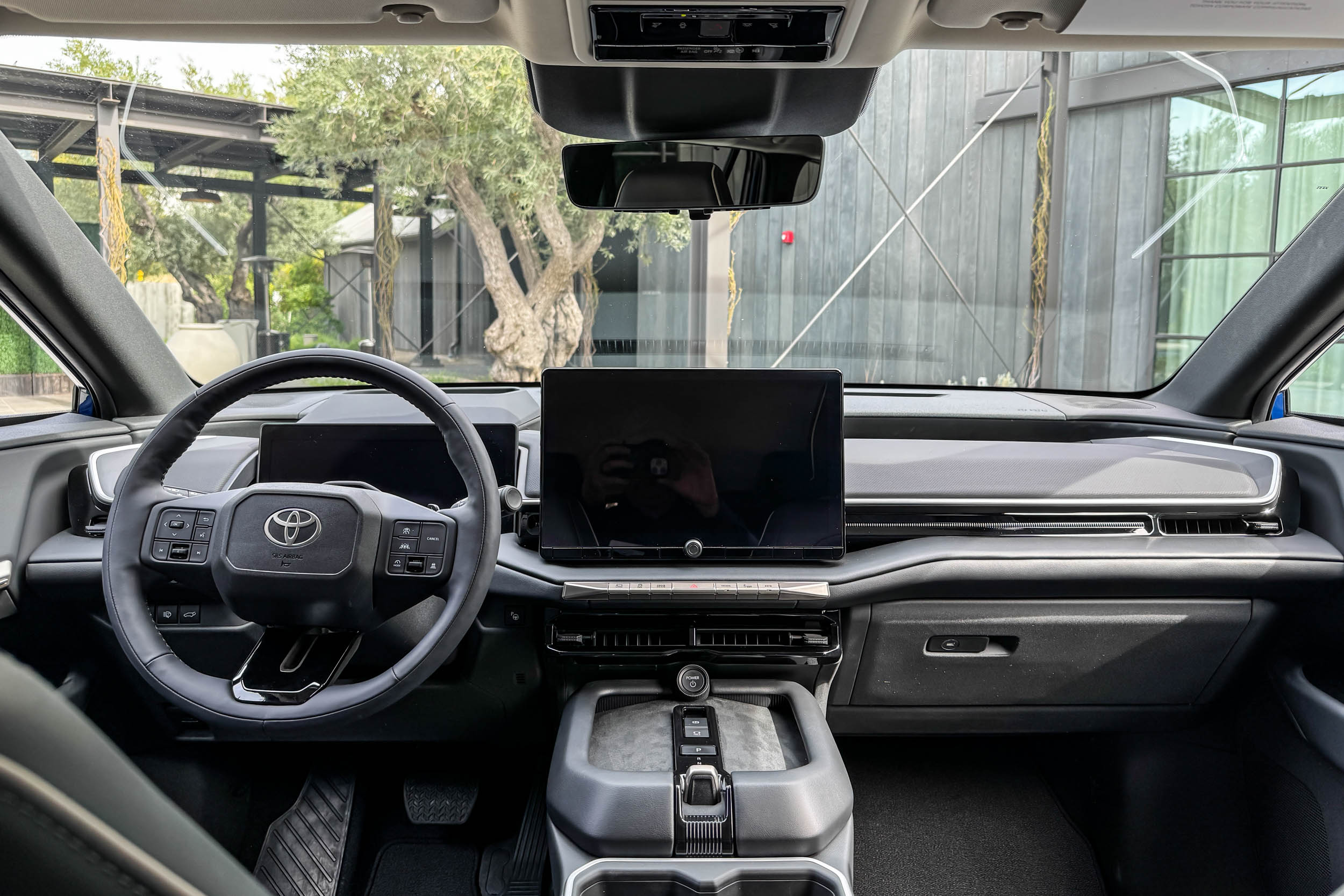
With hands nice and warm, the driver will look at a 12.3-inch digital instrument cluster and a 14.0-inch center display. The latter, of course, includes wireless Apple CarPlay and Android Auto. Beneath the large screen, the Highlander retains dedicated HVAC controls, thank goodness.
Finally, to keep the scene serene, ambient lighting comes standard as well.
Limited to the Limited
Upgrading to the Limited trim largely throws in more traditional luxury features. The front seats add ventilation to the heat. The second-row captain’s chairs also include heat. Second-row passengers also get manual sunshades to pull up and block any bothersome inbound rays.
The driver gets a head-up display to view and access to a 360-degree view of what’s immediately around the Highlander. For good measure, Toyota also throws in lane-change assist and a few other driving aids to the already long list of standard aids included in the installed Toyota Safety Sense 4.0 system.
2027 Toyota Highlander: In Conclusion
While the Highlander going electric makes it the fourth Toyota BEV, behind the bZ, bZ Woodland, and C-HR models. It marks the first one built in the U.S. Final assembly happens in Georgetown, Kentucky, at Toyota Motor Manufacturing Kentucky. And the battery packs come from the newly opened Toyota Battery Manufacturing North Carolina plant.
Toyota kept mum on pricing. But I expect it to stay competitive with the Hyundai Ioniq 9, which starts a hair over $61K, when you include the destination charge. Then again, with the bZ starting at $36,350 with destination, I hope Toyota will actually undercut its Korean competitor, and by a healthy margin.
Whatever the price, we’ll start seeing them arrive at dealer lots toward the end of 2026. And we intend to provide you with a review around the same time. Based on the styling and front seats alone, I’m yearning for a better-than-expected driving experience. We’ll report back ASAP.
Read the full article here