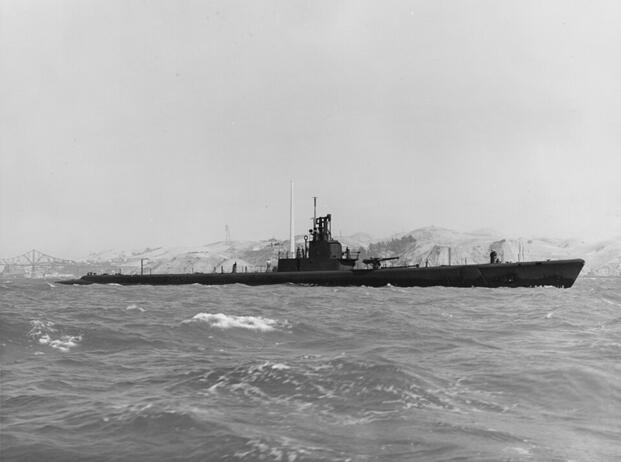
Robert Hunt was a torpedoman on the USS Tambor. He ran 12 consecutive war patrols in the Pacific and never fully shook what those missions felt like.
“I was just sure I was going to die,” he recalled years later. “So many of our subs were being lost and so many of my friends were gone.”
Hunt survived every one of those patrols. The reason had less to do with luck than with a critical flaw in Japanese anti-submarine tactics that American crews had been quietly exploiting since the opening days of the war.
A depth charge attack was a specific kind of ordeal. The weapon descended to a set depth and exploded, sending a concussive wave through the water. Crews heard a sharp metallic bang against the hull first as the shock wave hit, followed by a deep boom from the sound of the explosion itself.
The closer the detonation, the shorter the gap between those two sounds. Commanders measured distance by counting the interval between them. At 268 feet of water, a depth charge took roughly 30 seconds to sink before going off.
For a significant stretch of the Pacific war, American submarines survived those 30 seconds because Japan was dropping its charges in the wrong place or setting them to explode at too shallow a depth. Then in 1943, an American Congressman inadvertently told the Japanese what they were doing wrong.
A Flaw in Japan’s ASW Tactics
The Imperial Japanese Navy built its anti-submarine tactics around the wrong target. Japanese planners calibrated their depth charges against older American S-class submarines, which had a test depth of roughly 200 feet. Their standard Type 95 depth charge had just two settings, 100 feet and 200 feet.
The Balao-class submarines rolling out of American shipyards during the war could reach 400 feet. When Japanese escort ships came hunting, American commanders took their boats deep and waited. Japanese charges detonated well above them.
Japanese assessment practices made the problem worse. Escort commanders routinely claimed kills at the first sign of floating oil or debris, logging confirmed sinkings when their targets had already slipped away intact.
The U.S. Navy understood the secret and protected it. Nothing about actual American submarine depth capabilities appeared in public. No survival rate statistics, no press accounts that might tip off Japanese anti-submarine planners. The moment Japan learned the true depth American boats could reach, the advantage was finished.
Vice Adm. Charles A. Lockwood took command of the Pacific submarine fleet in February 1943 after his predecessor, Rear Adm. Robert H. English, died in a California plane crash. Lockwood immediately set about replacing cautious skippers with more aggressive officers.
He fought a sustained campaign against the Navy’s Bureau of Ordnance over defective torpedoes that were running too deep or failing to detonate, at one point demanding that if the bureau could not supply working weapons, they should “design a boathook with which we can rip the plates off the target’s sides.”
His submariners called him “Uncle Charlie.” He knew most of his commanders and even the crews by name.
The Congressman’s Tour
Andrew Jackson May was born June 24, 1875, on Beaver Creek in Floyd County, Kentucky. He spent years as a schoolteacher before graduating from Southern Normal University Law School in 1898, opening a practice in Prestonsburg with his twin brother and later serving as a circuit court judge. He ran for Congress in 1928, lost, ran again in 1930 and won.
By 1939 he was chairman of the House Military Affairs Committee. He was the chief architect of the Peacetime Selective Service Act in 1940, which provided the manpower base for the entire American war effort. He supported the GI Bill and worked closely with the Roosevelt administration on military legislation throughout the war years.
In a 1945 letter, Adm. Richard E. Byrd told him directly, “Everyone in general appreciates the superb job you have done for your country in connection with Army legislation, and Naval officers appreciate in particular the cooperation you have given the Navy.”
That record gave May access most civilians could not have imagined. In the summer of 1943, he and other committee members toured American military installations in the Pacific Theater. Naval officers gave the delegation detailed operational and intelligence briefings. May heard specifics about Pacific submarine performance that were classified at the highest levels.
He came home in June 1943 and held a press conference.
May was trying to ease public anxiety. Families were frightened for their sons in the submarine service. He told the assembled reporters that American submariners were surviving at high rates. The reason, he explained, was that the Japanese were setting their depth charges too shallow. The enemy’s weapons were going off well above where the submarines ran.
Press associations moved the story across their wires that same day. Newspapers published it nationwide. One of them was a paper in Honolulu, Hawaii, the island chain where the Pacific submarine fleet was based and where Japanese intelligence maintained an active presence.
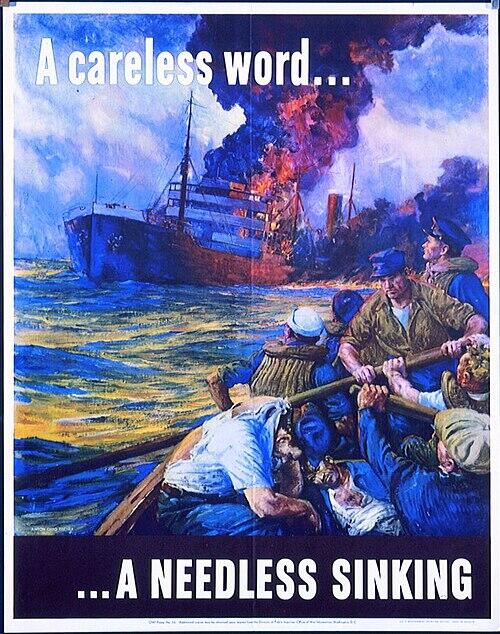
Since 1942, the Office of War Information had been distributing “Loose Lips Sink Ships” posters through the War Advertising Council, plastering them across naval bases, shipyards and public spaces as part of a direct national campaign against careless talk about military operations. Every sailor, dockworker and defense plant employee in the country had seen them.
Editors at American newspapers apparently concluded that a sitting congressman’s public statement was a different category of information. Japan received the information. Soon after, American submarine losses would increase.
The ordeal became known as the May Incident.

The Loss of American Submarines
Some of the heaviest losses came in the months immediately after the press conference.
In September 1943, the USS Wahoo departed Midway for the Sea of Japan under strict radio silence. Her skipper was Lt. Cmdr. Dudley W. “Mush” Morton, one of the most effective submarine commanders in the Pacific war. Morton had sunk 19 Japanese ships across four patrols.
Before his first patrol in command, he told his crew the Wahoo was expendable, their job was to hunt the enemy, and anyone who wanted off the boat had half an hour to say so. Not one man took him up on it.
Lockwood later wrote in the foreword to the book “Wake of the Wahoo” that Morton was a “natural leader and born daredevil” whose crew “would follow their skipper to the Gates of Hell.”
On Oct. 11, 1943, a Japanese anti-submarine aircraft spotted a surfaced submarine in La Pérouse Strait, the narrow passage between the Japanese island of Hokkaido and the Russian island of Sakhalin. The plane attacked with three depth charges dropped close aboard. Japanese records identified the target as the Wahoo.
No further contact was ever made with Morton or any of his 79 crewmen. The Navy declared the boat missing in November 1943. The wreck was not located until 2006, lying at 213 feet in the strait.
No documented evidence establishes a direct connection between May’s press conference and the loss of the Wahoo. Though, she went down four months after Japan allegedly learned that American submarines were operating far below the depth their charges could reach.
Nevertheless, the timing of the vessel’s loss as well as the loss of other submarines in subsequent months remains evidence enough for most people.
The Navy Responds
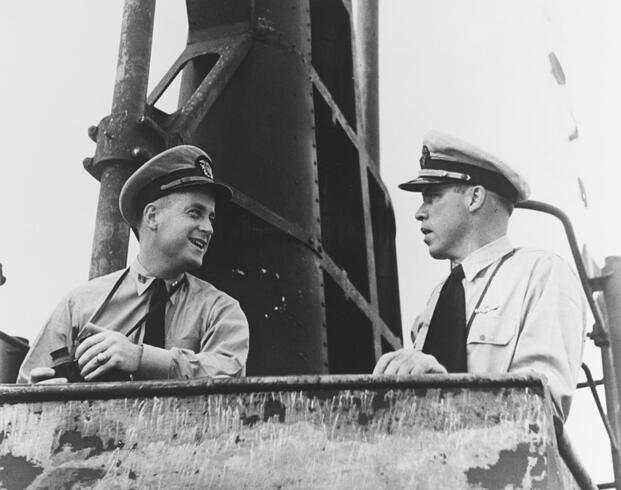
Lockwood learned what May had said and immediately wrote to Rear Adm. Richard S. Edwards.
“I hear Congressman May said the Jap depth charges are not set deep enough,” Lockwood wrote. “He would be pleased to know that the Japs set them deeper now.”
He estimated that Japanese anti-submarine forces reset their depth charges to detonate at around 250 feet after May’s statements circulated through the American press. The adjustment put American submarines in significantly greater danger during evasion.
Clay Blair served as a submarine officer during WWII before becoming one of the most respected military historians of his generation. His 1975 book “Silent Victory” remains the definitive history of the Pacific submarine campaign. Blair documented Lockwood’s full assessment of what had happened.
After the war, Lockwood stated, “I consider that indiscretion cost us ten submarines and 800 officers and men.”
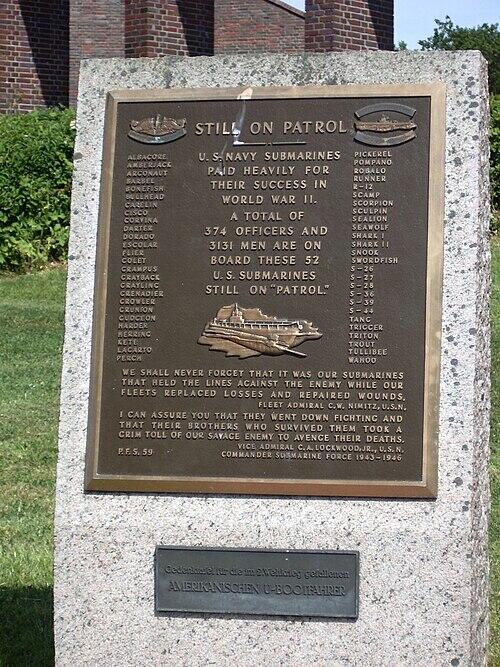
Fifty-two American submarines were lost during World War II, and more than 3,500 men went with them. The casualty rate in the submarine service reached nearly 22 percent, the highest of any branch of the armed forces.
By Lockwood’s count, May’s press conference accounted for roughly one in five of those deaths.
An Unresolved Question
A post-war assessment from the Navy’s Pacific Submarine Fleet found that Japanese anti-submarine forces never actually determined the true maximum operating depth of American submarines at any point during the war.
The report confirmed that Japanese depth charge settings did deepen after 1943. Though, it made no finding that May’s disclosure specifically caused that adjustment.
Japan was also improving its own weapons regardless of May’s statement. In 1943 the Imperial Japanese Navy fielded the Type 3 Model 1 depth charge, capable of reaching nearly 475 feet, roughly 80 feet deeper than the Type 95, and it sank through water about 50 percent faster than previous models. Those improvements would have posed a greater threat to American submarines regardless of anything said at a press conference.
Whether May handed Japan the specific intelligence that drove the change in tactics, or whether Japanese planners were already finding their way to the same conclusion, is a question that has not been definitively answered.
Lockwood believed for the rest of his life that May was responsible for the change in Japanese tactics. He had spent the rest of the war counting the ships that did not come home.
Andrew May’s Later Life
May faced no official consequences for the press conference. The Navy did not move against him publicly. He kept his chairmanship and served out his term. Colleagues who knew his legislative history argued that one reckless statement did not erase years of substantive work on behalf of the military. Byrd’s 1945 letter was not an isolated expression of gratitude.
May’s congressional career ended through an entirely separate set of decisions.
Early in the war, he developed a working relationship with Henry and Murray Garsson, two New York businessmen with no background in munitions who wanted defense contracts. May used his position as chairman to push Army ordnance officials and federal procurement figures toward the Garssons.
The brothers secured substantial contracts during the war. Cash payments found their way back to May. A Senate investigating committee uncovered the arrangement in the years after the war.
The investigation found the Garssons had made excessive profits while delivering faulty ammunition to the military. Their 4.2-inch mortar shells were fitted with defective fuses that caused premature detonation in the field. Those faulty rounds killed an estimated 38 American soldiers.
May lost his 1946 reelection bid as the scandal became public. A federal jury convicted him on bribery charges July 3, 1947, after deliberating less than two hours. He was 74 years old when he entered federal prison and served nine months.
President Harry Truman granted him a full pardon in 1952. He returned to Prestonsburg, practiced law and died Sept. 6, 1959. Kentucky later named a lodge at Jenny Wiley State Resort Park in Prestonsburg in his honor.
The May Incident became a fixture in operational security training. A careless speech from a politician with more knowledge of military affairs than he should have, led directly to one of the worst leaks in American military history. While there is no definitive proof between his leak and the loss of hundreds of American sailors, the May Incident exposes how enemy forces could gather intelligence outside of military sources.
Read the full article here