The downing of an Iranian warship on Tuesday in the Indian Ocean by U.S. Navy forces marks the first time an American submarine has destroyed an enemy vessel in combat since the final days of World War II.
The target of the United States’ fast-attack submarine torpedo was the IRIS Dena, a Moudge-class frigate carrying approximately 180 crew members, according to confirmation by the Pentagon. The vessel sank about 20 nautical miles south of Galle in Sri Lanka, where authorities recovered several bodies and rescued 32 wounded sailors while roughly 100 others remained missing. Sri Lanka’s deputy foreign minister told local television that at least 80 people were killed in the strike.
The Iranian frigate was returning from the 2026 International Fleet Review, which it had attended in Visakhapatnam, India. It was transiting international waters when it was hit.
‘Quiet Death’
Defense Secretary Pete Hegseth confirmed the strike Wednesday during a Pentagon press briefing alongside Chairman of the Joint Chiefs of Staff Gen. Dan Caine.
Yesterday, in the Indian Ocean… an American submarine sunk an Iranian warship that thought it was safe in international waters. Instead, it was sunk by a torpedo. Quiet death. The first sinking of an enemy ship by a torpedo since World War II. – Hegseth at the Pentagon
Caine confirmed the ship was destroyed by a single Mark 48 torpedo fired from a U.S. Navy fast-attack submarine, with video footage taken from the submarine showing the frigate’s hull destroyed in the blast.
The Pentagon released that footage publicly, showing an infrared image of a massive detonation at the stern of the IRIS Dena before the vessel slipped beneath the surface.
Caine told reporters that U.S. forces had destroyed more than 20 Iranian naval vessels as part of Operation Epic Fury, adding that American forces had “effectively neutralized, at this point in time, Iran’s major naval presence in theater.”
Hegseth declared the Iranian Navy “combat ineffective, decimated, destroyed, defeated.”
The identity of the submarine was not revealed, as is standard practice for operational security around submarine operations.
Echoes of WWII
The last time a U.S. submarine sank an enemy warship with a torpedo was during World War II. The target was a Japanese coastal defense frigate in the Sea of Japan as the war was hours from ending.
That distinction belonged to the USS Torsk (SS-423), a Tench-class boat that fired the Navy’s final torpedoes of the war on Aug. 14, 1945, sinking the Japanese Kaibōkan escort vessel using a Mark 28 acoustic-homing torpedo and a Mark 27 “Cutie” torpedo.
Japan announced its surrender the following day, making Torsk’s kill the last enemy warship sunk in the entire conflict.
The sinking of the IRIS Dena also marks the first time in nearly 44 years that any nation’s submarine scored a kill. The last time any submarine had sunk an enemy warship in combat was during the Falklands War, when the Royal Navy’s HMS Conqueror, a Churchill-class nuclear-powered attack submarine, sent the Argentine cruiser ARA General Belgrano to the bottom using a salvo of Mark VIII straight-running torpedoes in 1982.
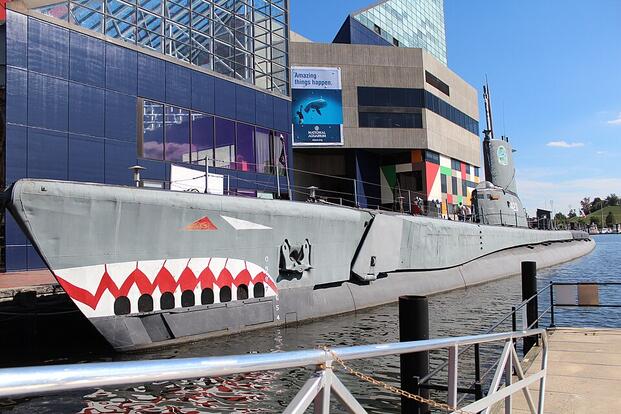
The strike on the IRIS Dena is also only the second time in history that a nuclear-powered attack submarine has destroyed an enemy vessel in combat, and the first ever SSN kill achieved with a guided torpedo. The U.S. Navy has operated an exclusively nuclear-powered submarine fleet since 1990, when USS Blueback, the last diesel-electric attack boat, was decommissioned.
The Mk 48 is a heavyweight wire-guided weapon designed to detonate beneath a ship’s keel, causing catastrophic structural damage rather than a simple hull penetration.
American Submarines and the Indo-Pacific
The location of Tuesday’s strike carries significance beyond the kill itself. Operation Epic Fury is a CENTCOM operation, with its naval forces operating under 5th Fleet, headquartered in Bahrain and covering the Arabian Sea and surrounding waterways.
But the IRIS Dena was not sunk in that battlespace. It went down hundreds of miles to the east, in waters well within 7th Fleet’s Indo-Pacific AO, suggesting the U.S. submarine may have tracked the frigate well outside the theater of conflict.
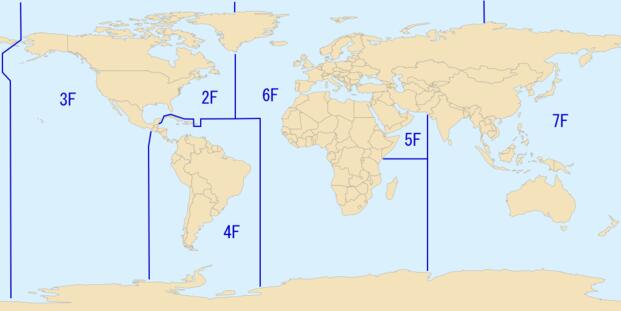
Whether the boat that fired the torpedo belonged to 5th Fleet or 7th Fleet, the Pentagon has not said—and it is unlikely to. The identity and assignment of U.S. submarines on active operations are among the most tightly held pieces of information in the American military.
What the strike does demonstrate is the extraordinary range at which American submarine forces can operate. The IRIS Dena had just completed multinational naval exercises with regional navies off the Indian coast, was transiting international waters far from the Persian Gulf and still found itself within range of a torpedo it never saw coming.
Hegseth closed his remarks with a direct invocation of the Navy’s wartime history.
“Like in that war, back when we were still the War Department, we are fighting to win,” he said.
Read the full article here