Commercial ships moving through one of the world’s most critical energy corridors are under fire as the war against Iran has spread into the Strait of Hormuz.
Attacks on several merchant vessels in the narrow waterway between Iran and Oman this week signal a dangerous new phase of the conflict. Projectiles struck multiple commercial ships transiting the corridor, raising alarm across global energy markets because the strait carries about 20% of global petroleum liquids consumption and serves as the primary export route for Gulf oil producers.
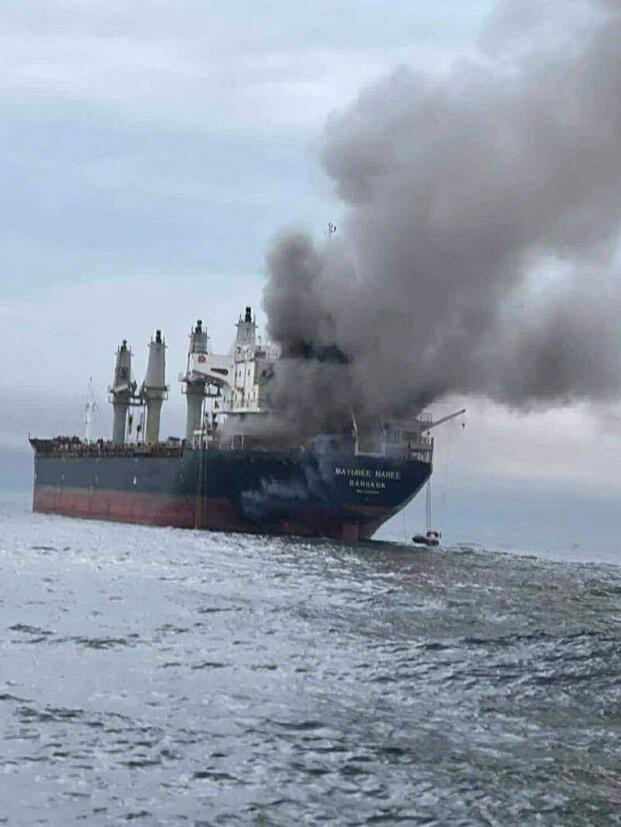
Several commercial vessels were struck while transiting the Strait of Hormuz this week, according to maritime security reporting and additional international reporting. The Thai-flagged cargo ship Mayuree Naree was reportedly hit by two projectiles, sparking an engine-room fire and causing significant damage. Twenty crew members were rescued while three remained missing, according to reports.
Other ships, including ONE Majesty and Star Gwyneth, were also reported damaged as vessels moved through the narrow shipping lane linking the Persian Gulf and the Arabian Sea.
Fighting across the region has already expanded beyond traditional battlefields. Missile strikes and attacks on commercial vessels have killed sailors and targeted shipping infrastructure as Tehran and its allies attempt to increase pressure on U.S. and Israeli interests across the Middle East.
Military.com reached out for comment to U.S. Central Command, the Pentagon, U.S. Naval Forces Central Command, the State Department and multiple maritime security organizations.
World’s Oil Lifeline
The attacks struck one of the most strategically important shipping corridors in the world. Oil tankers and cargo vessels moving through the strait carry crude exports from Saudi Arabia, the United Arab Emirates, Kuwait, Iraq and Iran, to markets across Asia, Europe and North America.
The Strait of Hormuz sits between Iran and Oman and connects the Persian Gulf and the Arabian Sea. The narrow passage remains one of the most strategically sensitive maritime chokepoints in the world.
Oil tankers departing gulf ports rely on the route to reach global markets. Saudi Arabia, Iraq, Kuwait, the United Arab Emirates and Iran all ship massive volumes of crude through the corridor before tankers disperse toward refineries across the globe. The U.S. Energy Information Administration estimates roughly 20 million barrels of petroleum liquids move through the strait each day, representing about 20% of global petroleum liquids consumption.
Energy markets watch the corridor closely. Even brief disruptions can ripple through global shipping routes and push oil prices higher.
Analysts have warned that Iran has the ability to threaten virtually the entire strait using anti-ship cruise missiles and other coastal weapons positioned along its shoreline, giving Tehran the capability to disrupt shipping throughout the narrow waterway during a crisis.
Attacks on Shipping Raise Fears of Wider Gulf Conflict
The maritime attacks are raising fears that the conflict could spread deeper into global shipping lanes.
Iran has long viewed maritime pressure in the Persian Gulf as a strategic lever during confrontations with Western powers. The country’s Islamic Revolutionary Guard Corps Navy (IRGCN) has repeatedly harassed foreign vessels, seized tankers, and threatened to disrupt traffic through the Strait of Hormuz.
Past incidents have included tanker seizures and sabotage attacks targeting commercial vessels moving through the region. Iranian forces have previously boarded and seized ships transiting the strait during periods of heightened tension with the United States and its allies.
Earlier confrontations in the Gulf also saw attacks on civilian oil tankers blamed on limpet mines and other explosive devices—incidents that heightened tensions and prompted international condemnation at the time.
US Navy On Guard
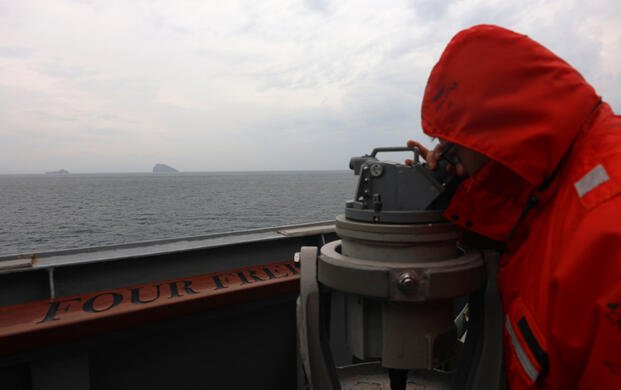
U.S. Navy forces routinely patrol the Persian Gulf and the Strait of Hormuz to protect commercial shipping and deter attacks on vessels moving through the corridor.
Those patrols fall under the authority of the U.S. Navy’s Fifth Fleet, headquartered in Manama, Bahrain, and the broader command structure of U.S. Central Command. Warships, patrol aircraft and coalition naval units regularly monitor traffic through the narrow waterway.
U.S. forces have previously escorted commercial vessels through the strait during periods of heightened tension, including operations designed to protect U.S.-flagged ships after earlier tanker attacks threatened maritime traffic in the region.
Read the full article here