Two uniformed service members stand at the door.
Inside the military community, that moment has a name: “the knock.”
When a U.S. service member dies, casualty notification teams deliver the news no family ever wants to receive. For the families who answer that door, life instantly divides into before and after.
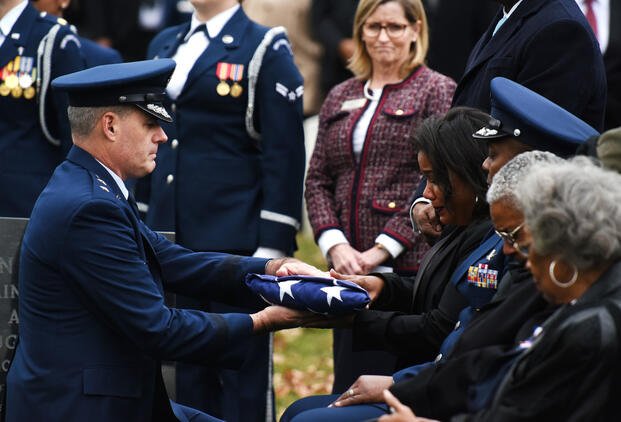
In the hours that follow, casualty officers guide survivors through the formal processes of military loss, notifications, benefits, memorial services and burial honors.
But after the ceremonies end and the headlines fade, the grief is only beginning.
For more than three decades, the Tragedy Assistance Program for Survivors (TAPS) has quietly stepped in to help families navigate that long road forward.
In an interview with Military.com, founder and president Bonnie Carroll described how the organization grew from her own loss into one of the most influential survivor support networks in the military community.
A Mission Born From Loss
Carroll never expected to start a national organization.
Her husband, Brig. Gen. Tom Carroll of the Alaska Army National Guard was killed in 1992 when a military aircraft carrying eight soldiers crashed during a flight in Alaska.
At the time, Carroll believed her background had prepared her to help others through tragedy. She had served in the Air National Guard and Air Force Reserve and had professional experience supporting victims of traumatic loss.
But when the news arrived, everything changed.
“At first, I thought I could help others through this terrible tragedy,” Carroll said. “But then, it became abundantly clear that life had forever changed and I could barely breathe.”
Despite the military’s extensive systems for casualty notification, burial honors, and survivor benefits, Carroll soon discovered something missing: a community where military families grieving the loss of a loved one could connect with others who truly understood their experience.
“I spent two years searching for the kind of support network I knew existed for other types of loss in our society, but it had never been created for the families of America’s fallen heroes,” she said. “I couldn’t believe it didn’t already exist.”
When it became clear that it didn’t, she created one.
Filling a Gap the Military Couldn’t
Today, TAPS operates nationwide and works closely with casualty officers, chaplains and survivor assistance teams across the Department of Defense.
Its mission is built around four core services: peer-based emotional support, casework assistance, a 24/7 helpline and connections to grief and trauma resources.
“When a service member dies, the military begins the solemn responsibility of notifying the family,” Carroll said. “At TAPS, our role begins almost immediately afterward.”
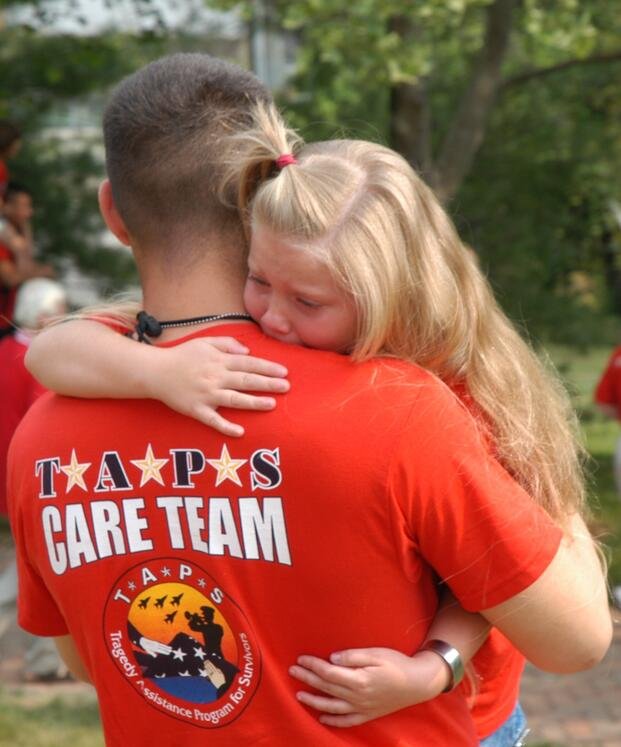
In the first 24 to 72 hours after a death notification, families are often in shock.
“They are suddenly faced with overwhelming decisions, questions and a profound sense that the world has shifted beneath them,” she said.
During those early days, TAPS often works alongside military casualty assistance teams to ensure families have someone they can call at any hour. Specifically, someone who understands the road ahead because they have walked it themselves.
The need for that type of support became clear even to senior military leaders as the organization grew. At one early gathering of surviving families, then Chairman of the Joint Chiefs of Staff Gen. John Shalikashvili watched as spouses, parents and children shared stories of the loved ones they had lost.
After seeing the families connect with one another, Carroll recalled that the general set aside his prepared remarks and spoke candidly.
He acknowledged that the military could render honors, administer benefits and ensure that the fallen received a proper burial.
But the military could not provide the kind of lifelong companionship grieving families often need.
“We can administer benefits and render honors,” Carroll recalled him saying. “But we cannot sit beside a grieving widow for the rest of her life.”
That, he explained, was something only other survivors could do.
When the Headlines Fade
While combat deaths often receive national attention, many of the families supported by TAPS are grieving losses connected to suicide, service-related illnesses or long-term complications from injuries sustained during military service.
Last year alone, 9,560 newly bereaved military and veteran survivors turned to TAPS for support, Carroll said.
The number reflects the evolving reality of military loss, one that extends far beyond the battlefield. Many of those losses are connected not to combat but to suicide, accident, illness or long-term complications from military service.
“We’re seeing families whose loved ones were injured years ago and are just now succumbing to those wounds,” Carroll said. “We’re seeing the impact of suicide and illness as a result of toxic exposures.”
For those families, the grief journey can be especially complex.
“The first days after a loss are surrounded by ceremony and attention,” Carroll said. “But after the memorial service ends and the headlines fade, families return home to a very different reality.”
That is when the long journey of grief truly begins.
The Power of Peer Support
At the center of the TAPS model is a simple idea: the most powerful support often comes from someone who has experienced the same loss.
Carroll calls it peer-based emotional support — survivors helping other survivors navigate the most difficult moments of their lives.
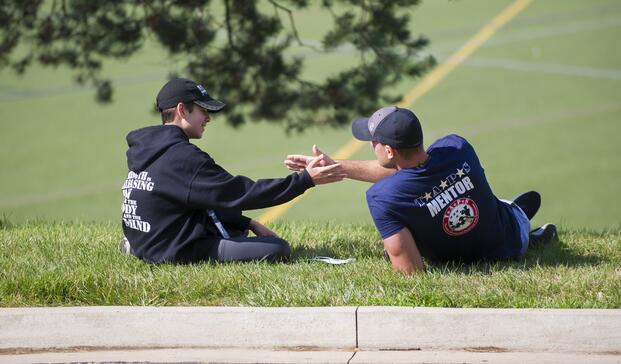
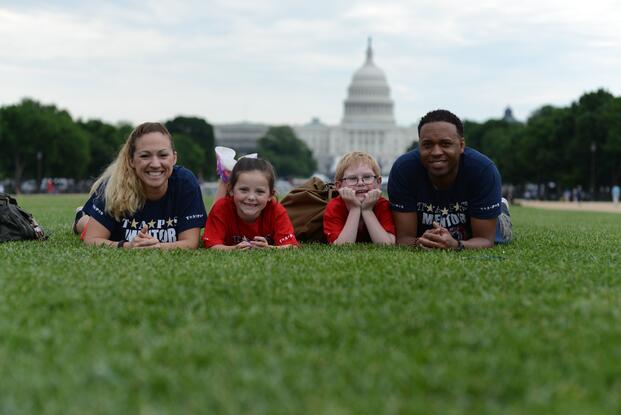
When newly bereaved families come to TAPS, they are often connected with survivors further along in their own grief journey who have been trained by TAPS as Peer Mentors. These mentors offer a special kind of support that only lived experience can provide, pairing spouse with spouse, parent with parent, and sibling with sibling. Their presence brings understanding, hope, and the reassurance that no one walks this road alone.
The shared experience quickly breaks down barriers.
“When I tell someone my husband was also killed in the Army, the conversation changes immediately,” Carroll said.
Suddenly, the questions become deeply personal.
“Did you have trouble sleeping? Did you feel like you were going crazy?” she said. “It validates what they’re experiencing – the normal human response to loss.”
Over time, many survivors who initially come to TAPS seeking help eventually become mentors themselves, guiding newly bereaved families through the same path they once walked.
Carroll describes that transformation simply: “From grieving to growth.”
A Community for the Long Road
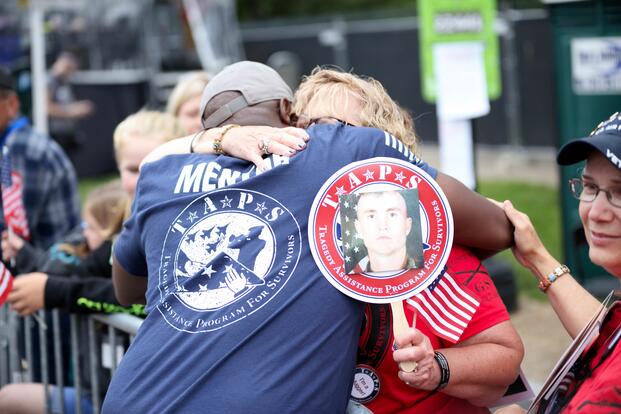
Each Memorial Day weekend, thousands of surviving military family members gather in Washington, D.C., for the TAPS National Military Survivor Seminar and Good Grief Camp for children.
More than 2,500 survivors attend the event annually, including spouses, parents, siblings and children of fallen service members.
While grief is central to the gathering, Carroll says the atmosphere is often something very different.
“You might expect to walk into a room defined by grief and sorrow,” she said. “Instead, you find a space filled with gratitude for lives of service, and with enduring love, honor and remembrance.”
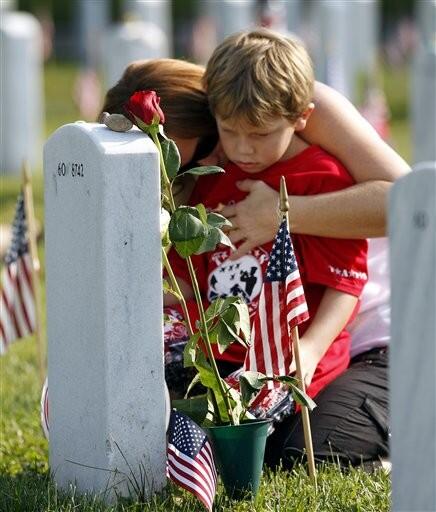
For children who lost a parent in military service, the event can be especially powerful.
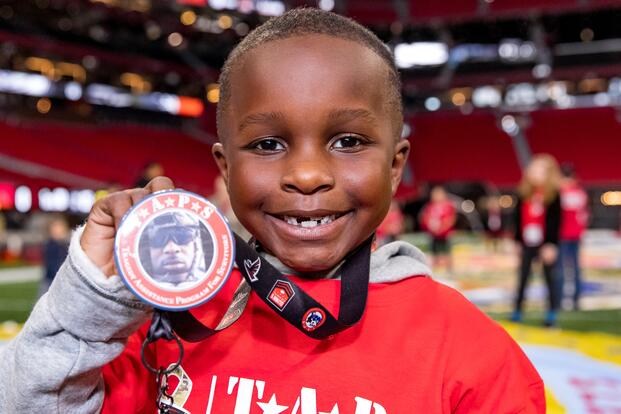
Carroll recalled a young girl attending Good Grief Camp for the first time. Wearing a photo button of her father, she ran up to another child about her same height, also wearing a similar button.
“Is your dad dead?” she asked. When the other child nodded, she proudly pointed to her own photo.
“This is my dad,” she said. Within moments, the two children became inseparable.
“That’s the moment they realize they’re not alone,” Carroll said.
Support in the Darkest Hours
One of the most critical services TAPS provides is its 24/7 National Military Survivor Helpline, which connects grieving families with trained peer supporters at any time of day.
Some of the hardest calls arrive in the middle of the night.
“We get calls from people who say they don’t think they can keep going,” Carroll said.
In those moments, the goal is simple: stay present.
“We step into that dark place with them,” she said.
Sometimes those conversations last for hours. Sometimes they become the first step toward rebuilding a life after unimaginable loss.
Carroll has seen countless examples of survivors who once reached out in despair, later returning to help others.
“Thousands of stories of saving lives,” she said.
Meeting Families Where They Are
Over the years, TAPS has also found creative ways to reach survivors who might hesitate to attend traditional grief programs.
One of the most successful partnerships has come through professional sports leagues, particularly the NFL.
Through the league’s Salute to Service initiative, TAPS helps organize on-field tributes honoring fallen service members during games across the country.
Carroll said the events often attract survivors who might otherwise avoid grief support groups.
“A lot of dads didn’t want to sit in a grief group,” she said. “But they’ll come to a football game.”
Once there, they find themselves surrounded by other families who understand their loss.
“The real connection happens up in the suite,” Carroll said. “That’s where they realize they’re not alone.”
A Lifelong Community
More than 30 years after its founding, TAPS has grown into a nationwide community of survivors supporting one another through grief, remembrance and service.
Many of the children who first attended Good Grief Camp decades ago now return as mentors for newly bereaved families.
The cycle of support continues across generations.
Carroll says that transformation, from grief to service, remains one of the most powerful parts of the organization’s mission.
“Nobody wants to be part of this community,” she said. “But when tragedy happens, it becomes family.”
And for the families who have heard the knock on the door, that community can last a lifetime.
As Carroll often reminds survivors, there are no dues required to join TAPS.
“The dues have already been paid.”
For those wishing to find out more about TAPS please visit their website
Read the full article here