Rain enveloped me as I stepped out my back door, hands laden with fishing rods. I hurried over to my boat, with gooey muck splattering all over my Strike Bigeye Boots and rain bibs. In a flash, everything was soaked. The rainy season had arrived, bringing excellent fishing but also awful conditions for getting out on the water.
I loaded the rods in my rod box (at least I had the foresight to rig up indoors) and crouched in the mud hole that is my backyard to hitch the boat to the truck. I made quick work of the task and was off to the lake in no time.
Over the course of the day, the rain was relentless, but the fishing was phenomenal. And so was my choice of footwear. In conditions that make non-anglers question my sanity for being outside, the Strike deck boots delivered.
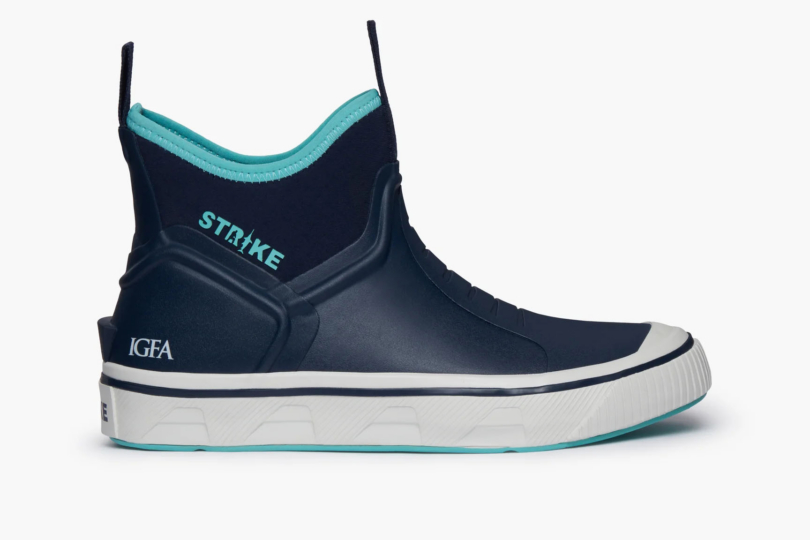
In short: The Strike Bigeye Boots ($110) have become my go-to footwear for spring fishing. The deck boots are some of the most comfortable I’ve worn and breathe better than most, if not all, rubber footwear. Whether I’m on the soaked deck of my bass boat or sloshing around the inflatable floor of my fishing raft, they provide excellent traction and protection from the nastiest rainstorms.
Strike Bigeye Boot Review
-
Upper Materials:
40% Aeroprene Mesh, 60% Vulcanized Rubber -
Outsole Materials:
45% Natural Rubber, 25% Calcium Carbonate, 15% Silica Filler, 5% Synthetic Rubber, 10% performance additives -
Footbed:
Ortholite Insole -
Colors:
Black, Navy, Off White -
Sizes:
7-13
Pros
-
Extremely comfortable insole
-
Breathes surprisingly well for a rubber boot
-
Grippy soles
-
Easy on and off
-
Lightweight
Cons
-
Cuff is not waterproof
-
Small amount of heel slip
-
Arch support is lacking
Comfort Makes the Bigeye Boots Stand Out
I view most rubber boots as a necessary evil. They’re heavy, blister-inducing, and swampy as all get out. And, they don’t offer much support.
But sometimes, a rubber boot can’t be beat, specifically in wet, muddy conditions. That’s a situation anglers often find themselves in, and nothing ruins a day faster than soaked socks and cold feet. Due to that, from October through May, you’ll usually find me rocking some sort of rubber shoe on the water.
If you’re not familiar with them, deck boots are a watered-down version of a full-on rubber boot. They’re generally shorter, reaching only to mid-ankle, but they use the same weatherproof rubber and neoprene materials. It’s vital that they grip slippery surfaces well, as anglers are often on soaked boat decks and docks.
Deck boots have become increasingly popular in recent years, and they’re a dime a dozen. But, there are a few things that stand out with the Strike Bigeye boots.
Insoles
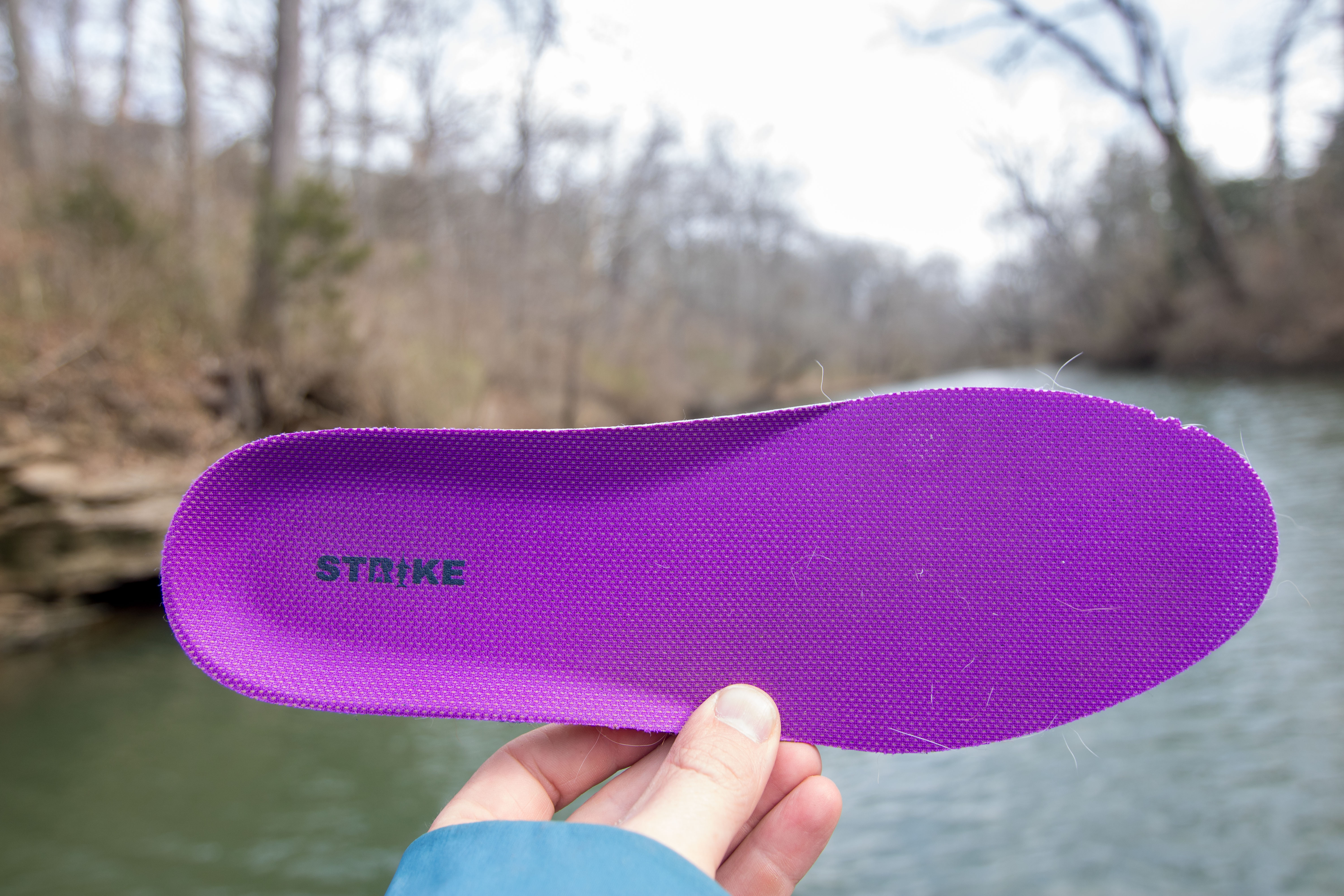
When I first put on the Strike Bigeye boots, the comfortable moccasin-like feel stood out immediately. These bad boys are soft, dare I say, cozy. My whole foot feels like it’s in a soft, padded blanket.
The OrthoLite insoles are especially soft, which is a great feature given the $110 price point of the Bigeyes. I often replace the stock insoles in boots with aftermarket ones, but that is completely unnecessary here. The insoles are very cushioned, and even after a full day on the front of my boat deck, I don’t feel any spots where the material is ultra compressed.
Those hard spots can cause serious pain throughout the day. It’s not an issue with these insoles, as they stay springy during long use.
Breathability
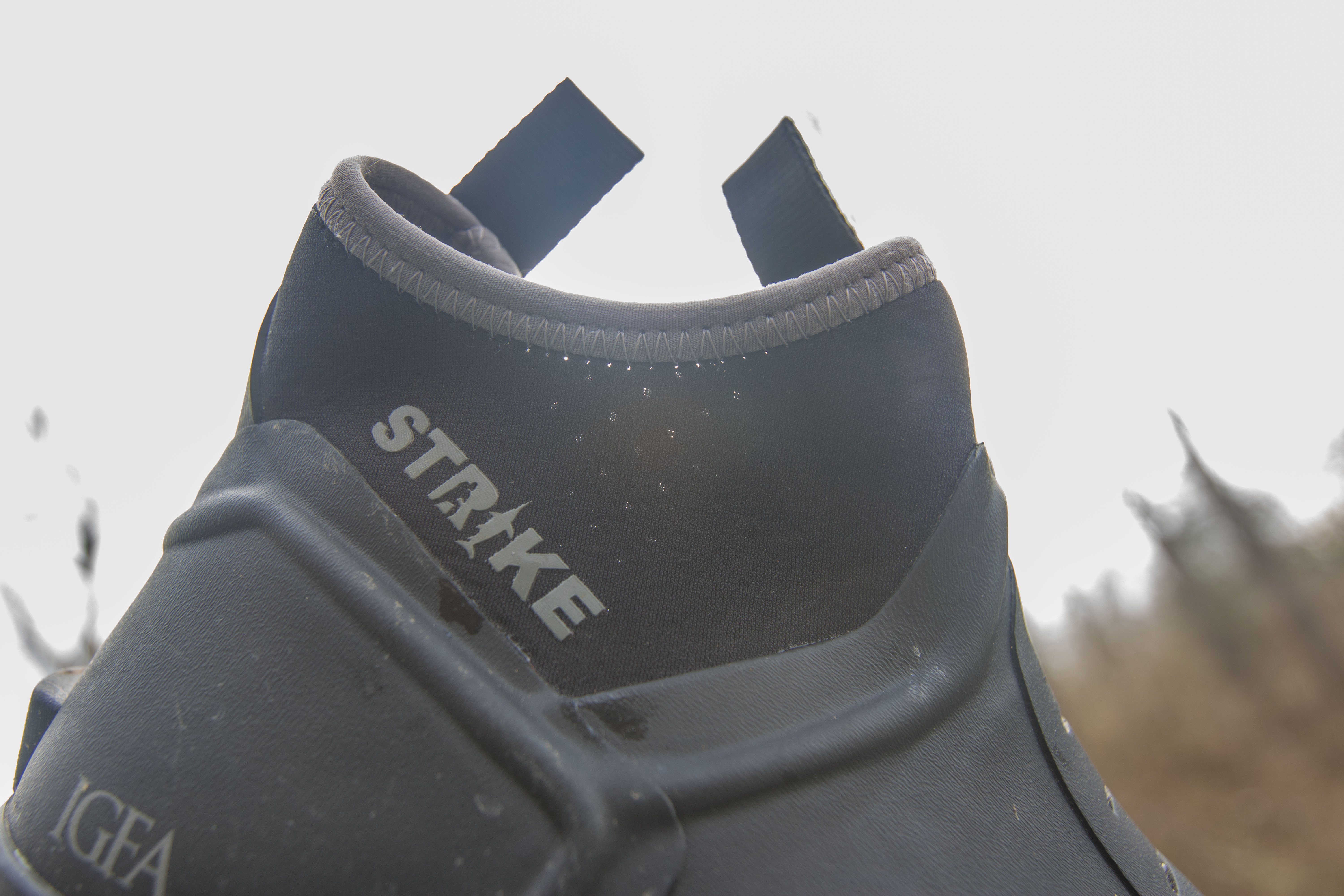
These boots don’t use standard neoprene for the inner and the upper cuff. It’s made out of something called Aeroprene, which is very similar. I’m not versed in the technical details of that particular material, but I can speak to how it stands out compared to standard neoprene boots I’ve worn.
It’s pretty much neoprene with small holes poked into it throughout. A mesh liner covers those holes, making it feel and look just like normal neoprene.
Why Aeroprene Is Good
These bad boys breathe. The small holes throughout the inner portion of the Strike Bigeye boots let my feet really air out. As I start to sweat, I can actually feel my feet cooling off. It’s an impressive feat for a rubber boot. It makes them extremely comfortable to wear, even on warmer spring days where I want waterproofness, but not warmth.
The entire material is soft and contributes to the overall boot’s comfort. Breathable neoprene. Who’d have thunk it?
Why Aeroprene Is Bad
Putting holes in neoprene makes it, uh, not waterproof.
That isn’t an issue at all with the Aeroprene on the interior of the boot, which is covered entirely by watertight vulcanized rubber. It’s simply a benefit that allows increased airflow in what would otherwise be a sweaty shoe.
However, it’s an issue with the “cuff” of the boot. If you find yourself on a body of water and submerge the Bigeyes past the rubber lower, water will penetrate. The cuff is not waterproof.
Now, there are a few caveats to that. First, Strike lined the interior of the boot with a “fast-drying mesh sock lining.” I put that to the test.
I waded out onto a boat ramp and allowed water to seep through the upper material. It came in rather slowly. After I got out, the inner portion of the cuff dried ridiculously fast. I’m talking bone-dry within 10 minutes. It’s clear that the fast-drying lining is only on the interior of the boot, because while the interior dried quickly, the exterior stayed wet for a much longer duration.
I’m not sure what voodoo magic is at play, but the quick-dry material is awesome. So, while the upper cuff isn’t waterproof, the inside won’t stay wet for long.
Second, it should be noted that deck boots aren’t really made for wading in water. Even with a fully watertight neoprene cuff on standard deck boots, it’s quite easy to wade over the top of them and fill ’em up with water.
For me, I’d take the tradeoff of breathability over a waterproof cuff any day on this style of boot. And 90% of the boot is still watertight.
Other Pros of the Strike Bigeye Boots
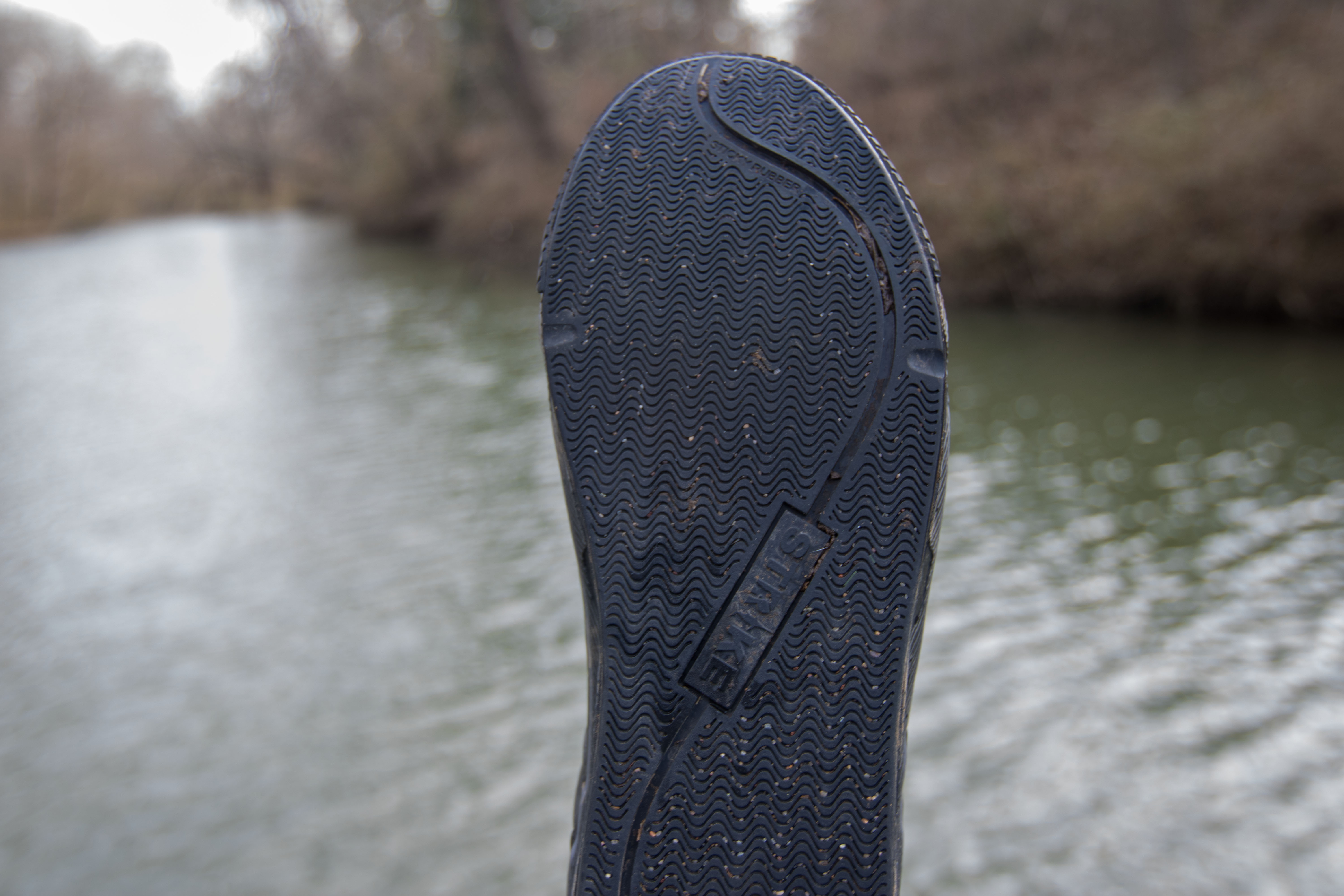
The main job of a deck boot is to provide superior traction on slippery surfaces. These boots do just that with flat, grippy soles with channels to funnel water.
To the untrained eye, the soles may not look grippy due to the lack of lugs or much texture. However, on a slippery boat deck or a dock, that’s exactly what you want. Having maximum surface area in contact at all times ensures a good grip. Think of deck boots like basketball shoes. More surface area equals solid traction.
On my bass boat in the rain, or on the inflatable, sopping-wet floor of my fishing raft, I’ve found that the Bigeye boots provide all the traction I need.
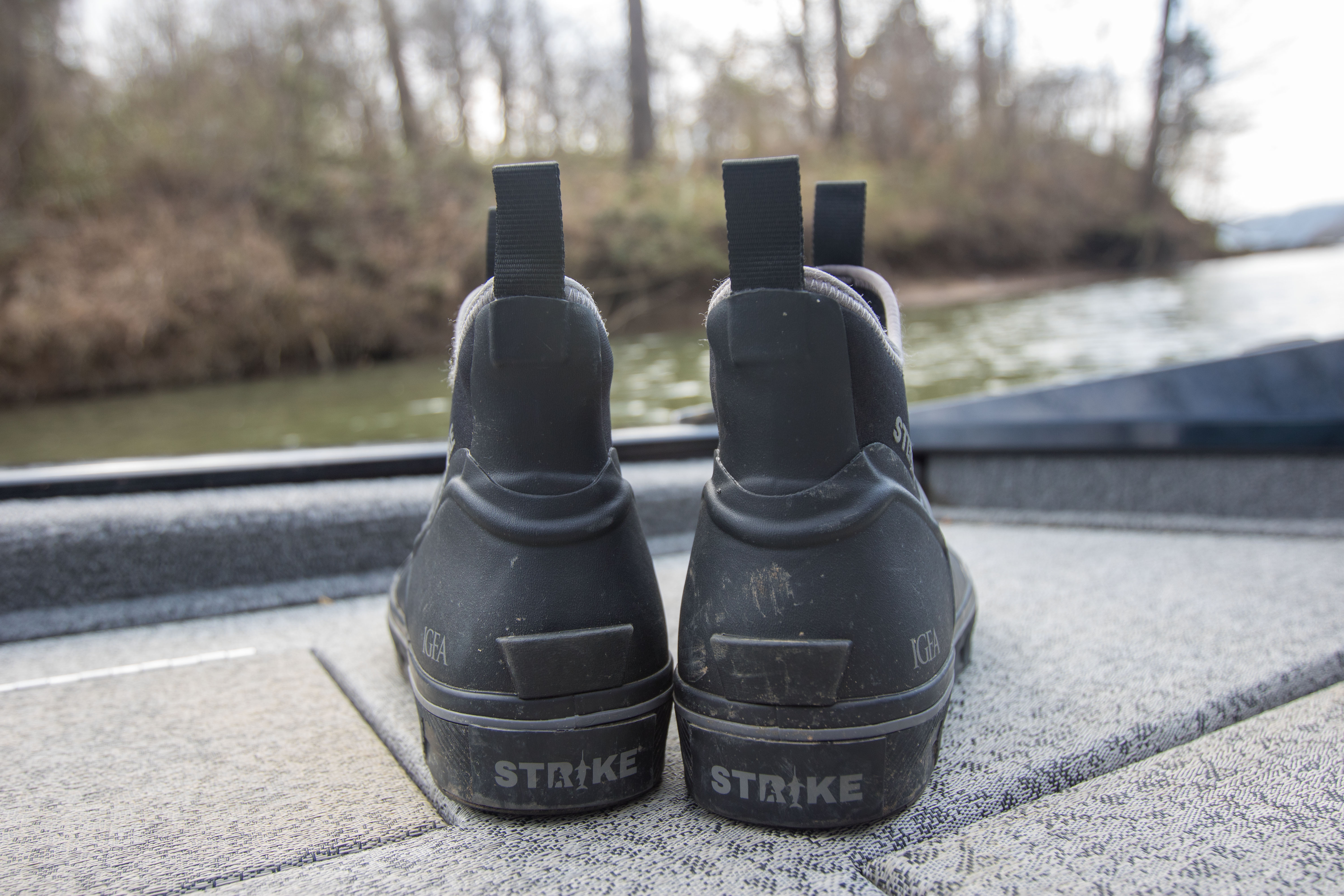
With two loops on the front and back of the cuff, it’s easy to slide these boots on. The fit is a touch on the looser side, but not overbearingly loose, and I can almost put them on without using my hands. With a grab of one of the tabs, they’re on in half a second.
A large kick tab on the back allows for complete hands-free removal. Due to the ease of putting on and removing, I find myself using these boots all the time around the house. They’re great for quick outdoor chores, like taking out the trash.
Another plus: these boots are lightweight and made from a variety of sustainable materials.
Where the Bigeye Boots Struggle
We already talked about the lack of waterproofing on the cuffs, but there are a few other minor things that could make these boots a touch better.
The first is the lack of arch support. Due to the inherent design of deck boots, the shoes are entirely flat, much like a Converse Chuck Taylor. Arch support ain’t there, but it is somewhat mitigated by the excellent insole.
I would also like to see the boots offered in half sizes. Sizing is almost always a pain with rubber boots, and these are no exception. There is a tiny bit of heel slip in the Bigeyes. The fit everywhere else is perfect, so sizing down isn’t an option.
If I were covering long distances in these boots, it would become a problem. Fortunately, you wear deck boots on boat decks, and you’re not really hiking in them. I’ve found that for everyday fishing applications, the heel slip isn’t a problem at all, and I appreciate the slightly looser fit for getting in and out of them. The point is, you’ll probably never find a slip-on boot that fits perfectly, and these don’t buck that trend.
Final Thoughts: Who the Strike Bigeye Boots Are For
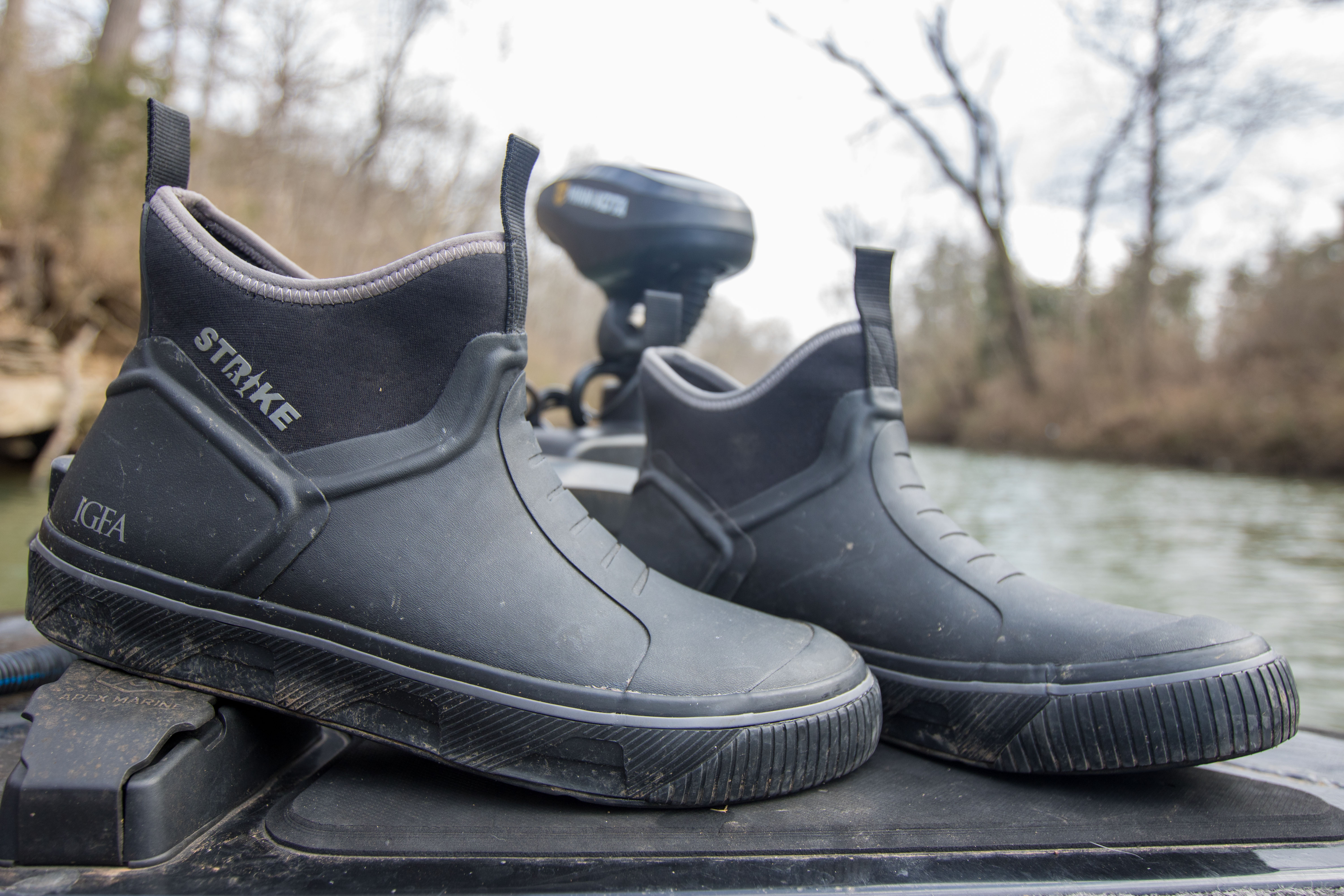
With a light, breathable, mostly waterproof design and grippy soles, the Strike Bigeye boots are perfect for anglers fishing in wet conditions. They excel particularly in the spring, when temperatures rise, and most rubber boots will leave you with sweaty feet. The Bigeyes breathe better than any other rubber boot I’ve worn.
Because of their breathability, I would say they run cooler than other deck boots and aren’t ideal for extremely cold environments. I’ve worn mine in temperatures down to the 40s and been just fine. But say I were to go on an East Coast offshore trip in January, and I’d likely be looking elsewhere.
Ultimately, if you’re looking for a waterproof three-season fishing shoe, these are tough to beat. They do everything a deck boot is supposed to do in a comfortable, lightweight package.
Read the full article here